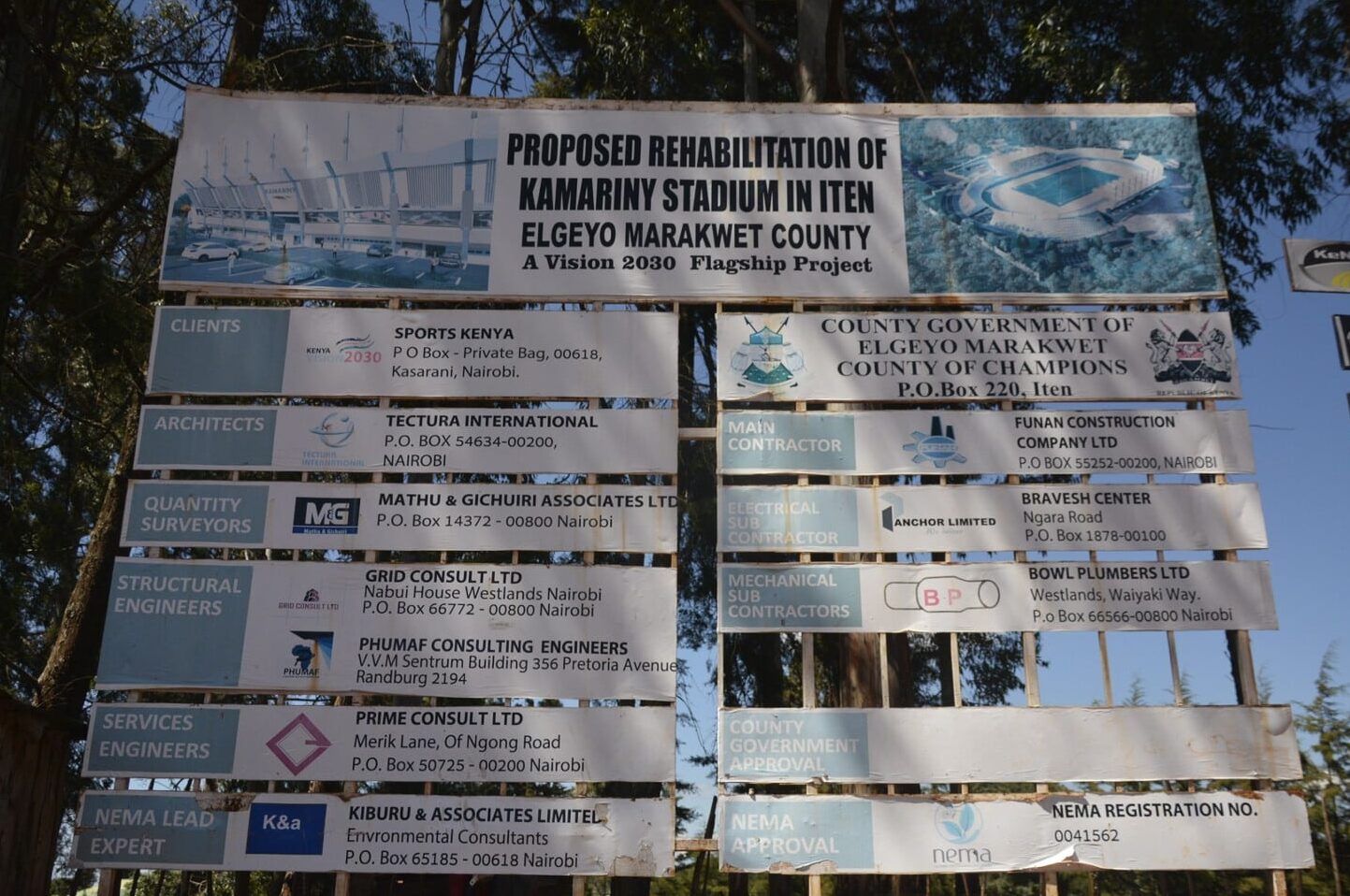
Uroš Kovač (Project B04 “Framing Futures”) examines stalled construction projects in Kenya—focusing on the suspended renovation of Kamariny Stadium—to show how “suspension” functions as a political and social process rather than mere failure. He argues that halted infrastructure projects become tools for state performance, economic speculation, and even civic dissent, complicating official narratives of development and progress.
Suspension as Politics: A Stadium and its Ruins in Northwest Kenya
By Uroš Kovač
Abstract
From mega-projects to small-scale repairs, many construction projects in Kenya are characterised by delays and false starts. One such case is the renovation of the Kamariny stadium, where since the 1960s world-class long-distance runners have prepared for international races. Part of the government’s Vision 2030 development agenda, the renovation promised to turn old athletics tracks into an imposing modern stadium. However, the construction was started and then suspended. Suspension as an ethnographic observation and an analytical framework provides a nuanced account of infrastructural development, one that complicates state-sanctioned narratives of vision and emergence. Conceptualised as a process and a deliberate political action – rather than an ontic condition – suspension is a resource for political performance and economic speculation, a tool for the state to assert itself as a provider of development, but also a method of civic dissent.
Reference
Kovač, U. 2025. Suspension as Politics: A Stadium and its Ruins in Northwest Kenya. Ethnos, 90(2), 313–339. DOI