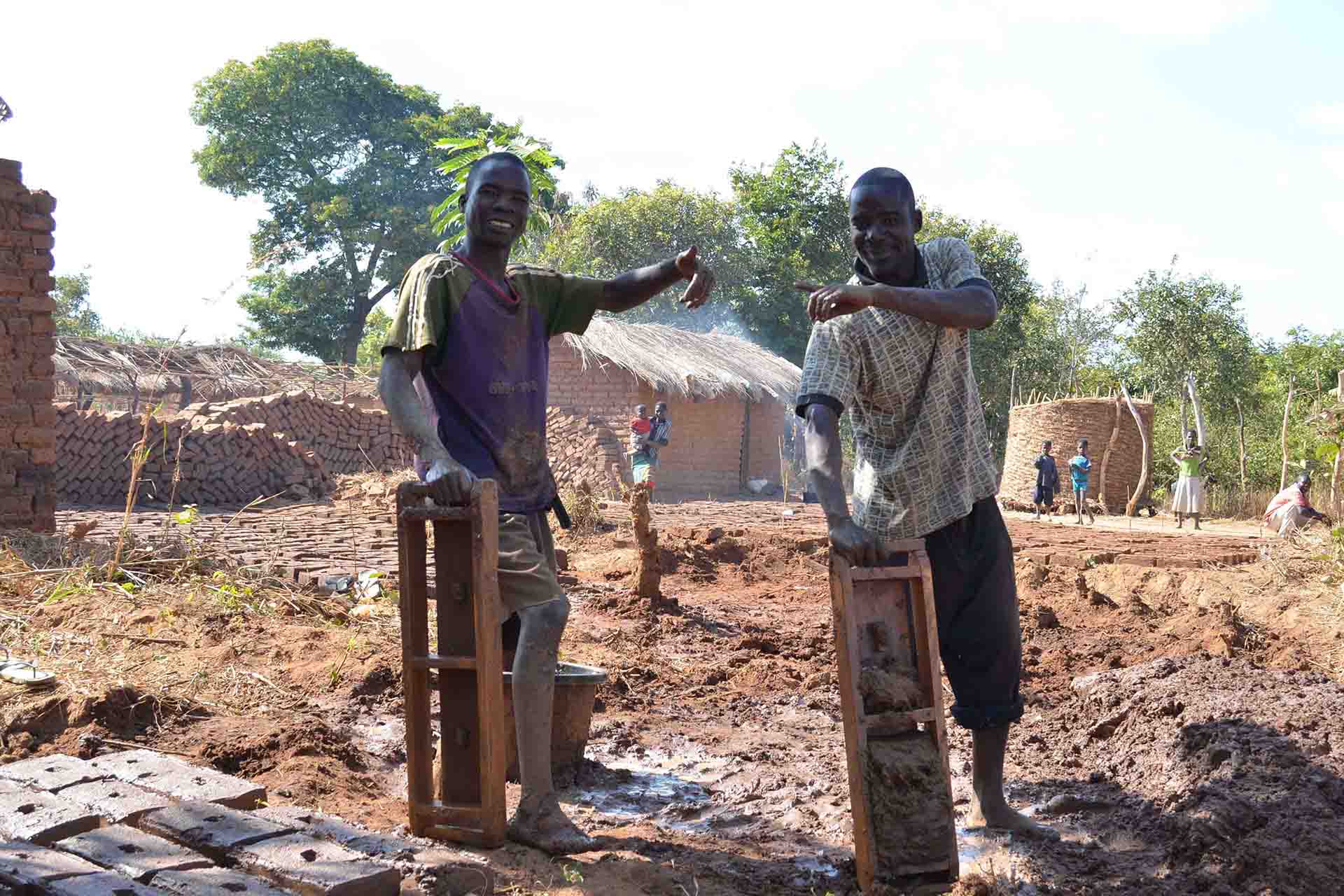
In this study, Jonas Guthoff, Martin Parlasca and Matin Qaim (Project C08 “Job Futures”) examine whether taking on off-farm work helps rural households in sub-Saharan Africa cope with seasonal food shortages. They find that seasonal labor shifts from farming to off-farm jobs—especially wage work—can reduce food insecurity, though the impact depends on local conditions and job availability.
Seasonality of employment and food security in rural sub-Saharan Africa
By Jonas Guthoff, Martin Parlasca and Matin Qaim
Highlights
- We argue that multi-year, high-frequency labor market surveys are essential for identifying pathways to reduce recurring seasonal food insecurity.
- The study uses high-frequency panel data from 3 African countries covering 4 years to study seasonality of food security and employment
- We find that lean season food insecurity recurs annually and widely affects rural households in sub-Saharan Africa.
- Off-farm wage employment is associational with higher food security during lean seasons in most contexts.
Abstract
Many rural households in sub-Saharan Africa rely on rainfed agriculture, meaning that harvests and incomes from farming are highly seasonal. This leads to recurring periods of food insecurity, commonly referred to as lean seasons. Off-farm employment may help mitigate seasonal food insecurity, but evidence on whether it actually does remains scarce. Using panel data from high-frequency phone surveys in Burkina Faso, Malawi, and Uganda, covering the period from 2020–2024, we examine seasonal labor reallocation and implications for food security throughout the year. We find that seasonal labor shifts from farming to off-farm sectors are associated with reduced seasonal food insecurity in most contexts, especially for off-farm wage employment. We also find that in regions where multiple cropping seasons are possible, work in farming is more strongly associated with food security than off-farm wage or self-employment. However, seasonal shifts from farming to other income-generating activities are not very large at the aggregate level, possibly due to lack of rural labor opportunities. These findings highlight that — depending on the context — improvements of opportunities for farming and off-farm employment are important to ensure year-round food security in rural sub-Saharan Africa.
Reference
Guthoff, J., Parlasca, M., Qaim, M. 2026. Seasonality of employment and food security in rural sub-Saharan Africa, Food Policy,
Volume 141, 2026, DOI