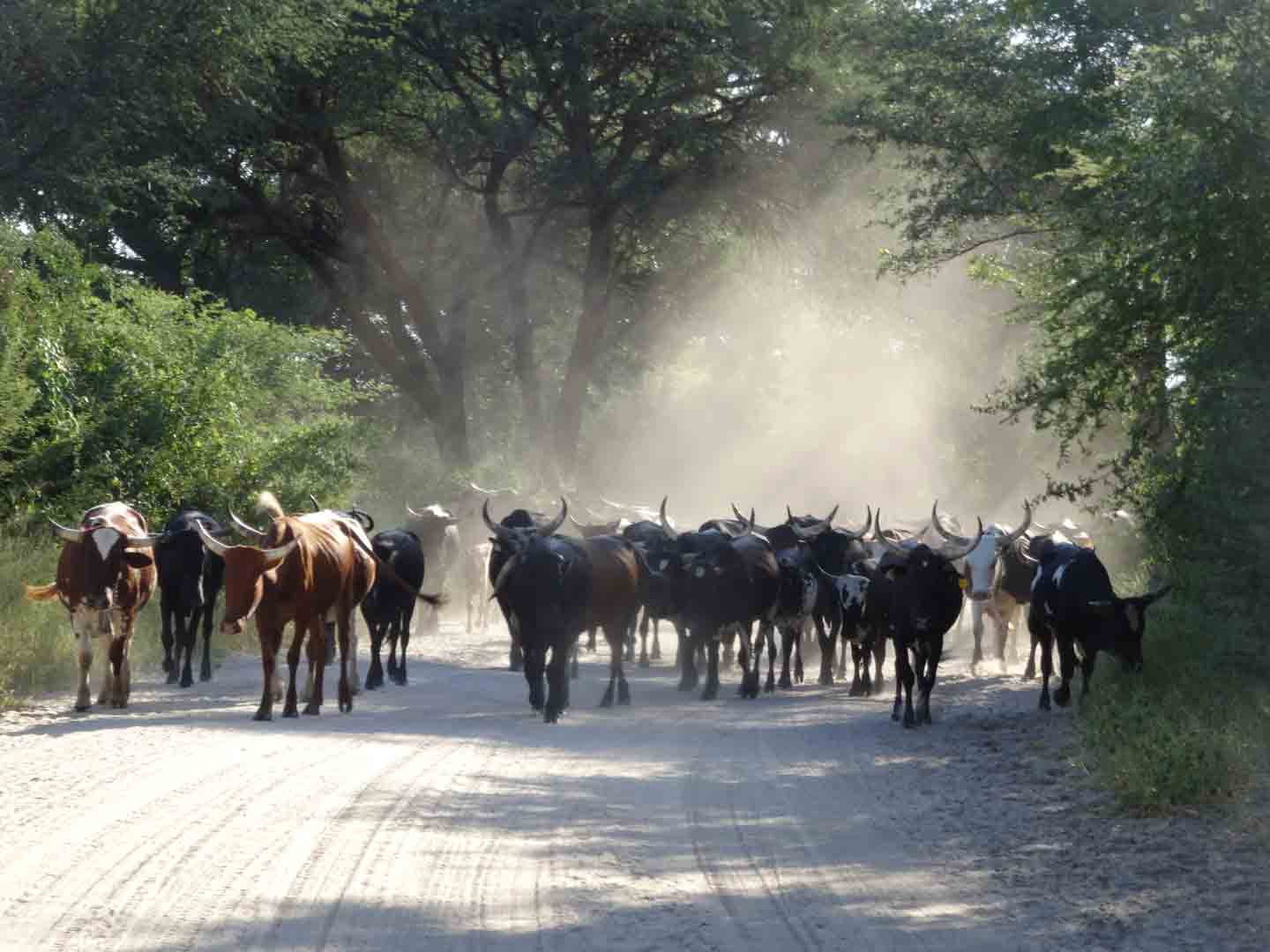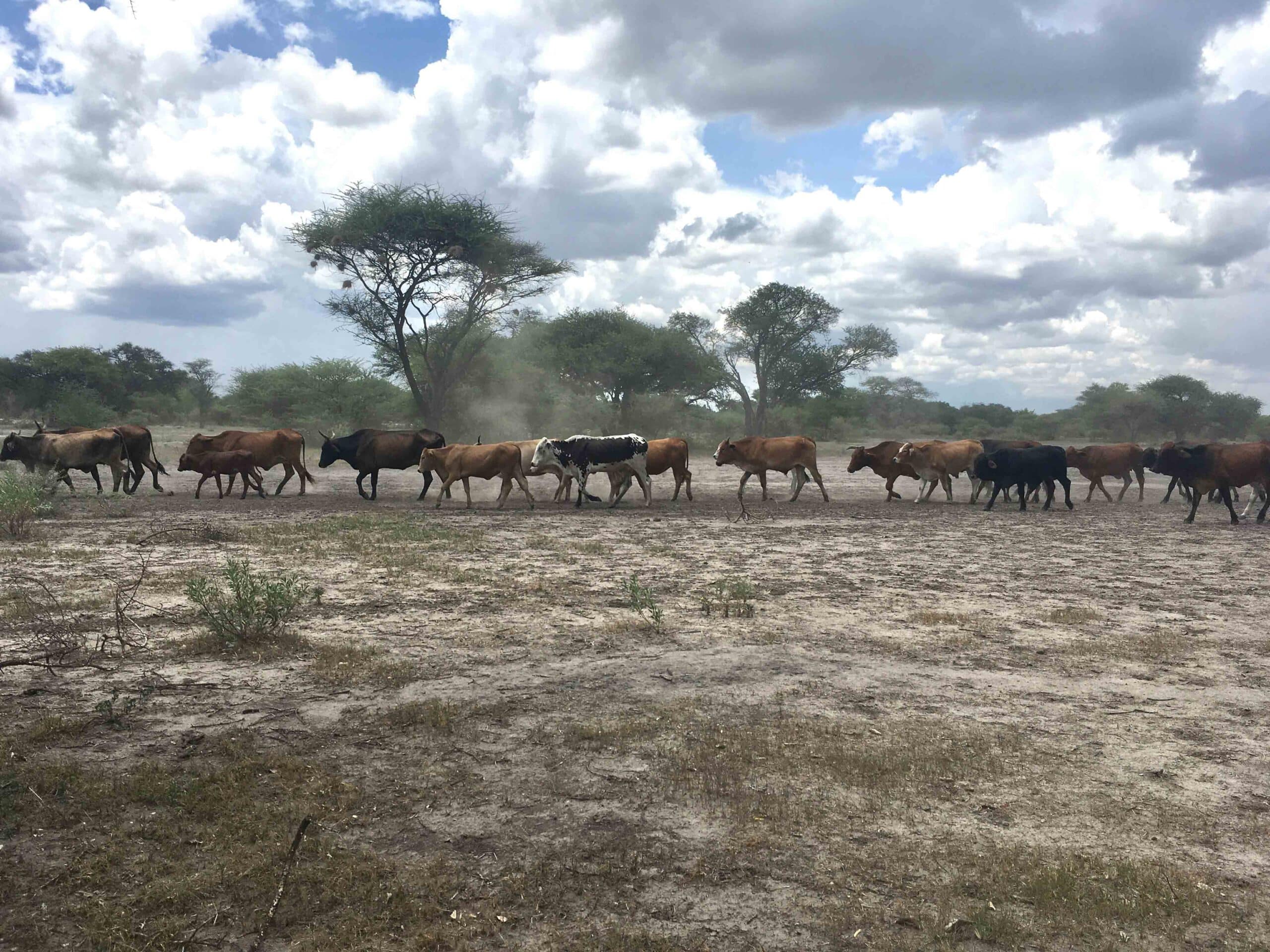
Wisse Van Engelen, Paula Alexiou, Manuel Bollmann, Julia Brekl, Emilie Köhler, Léa Lacan, Hauke-Peter Vehrs and Michael Bollig from our sub-project A04 “Future Conservation” argue that rewilding should consider not just restoring wildlife and habitats, but also the people and communities living alongside them. The authors propose complementing the traditional “three C’s” (Carnivores, Cores, Corridors) with “three B’s” (Bovines, Buffers, Barriers) to emphasize cattle, surrounding communities, and measures like fences that help people coexist with wildlife.
Bovines, buffers and barriers: A social scientific perspective on rewilding in the Kavango-Zambezi Transfrontier Conservation Area
By Wisse Van Engelen, Paula Alexiou, Manuel Bollmann, Julia Brekl, Emilie Köhler, Léa Lacan, Hauke-Peter Vehrs and Michael Bollig
Abstract
Rewilding is an increasingly popular nature conservation strategy globally. Originally, the strategy was formulated around the three C’s of Carnivores, Cores and Corridors, which captured the ecological aim of rewilding to restore trophic interactions across large connected landscapes. While the three C’s have proven to stick in the minds of the rewilding community, there is a need to go beyond them and attend also to the social aspects of rewilding. In this essay, we therefore offer a complementary heuristic framework, with particular applicability to Southern Africa’s conservation landscapes. Based on our research in the Kavango-Zambezi Transfrontier Conservation Area, we propose a framework for rewilding that seeks to integrate social aspects by drawing attention to cultural keystone species, communal areas adjacent to protected areas, and protection by separation. In place of the three C’s, these features can be summarized as the three B’s: Bovines, Buffers and Barriers. With these three B’s, we aim to shift the focus to what happens around the wild “cores,” where cattle roam, and where people may desire barriers such as fences to protect themselves and their livelihoods from wildlife.
Reference
Van Engelen, W., Alexiou, P., Bollmann, M., Brekl, J., Köhler, E., Lacan, L., Vehrs, H.-P., & Bollig, M. 2026. Bovines, buffers and barriers: A social scientific perspective on rewilding in the Kavango-Zambezi Transfrontier Conservation Area. Conservation Science and Practice, e70384. DOI