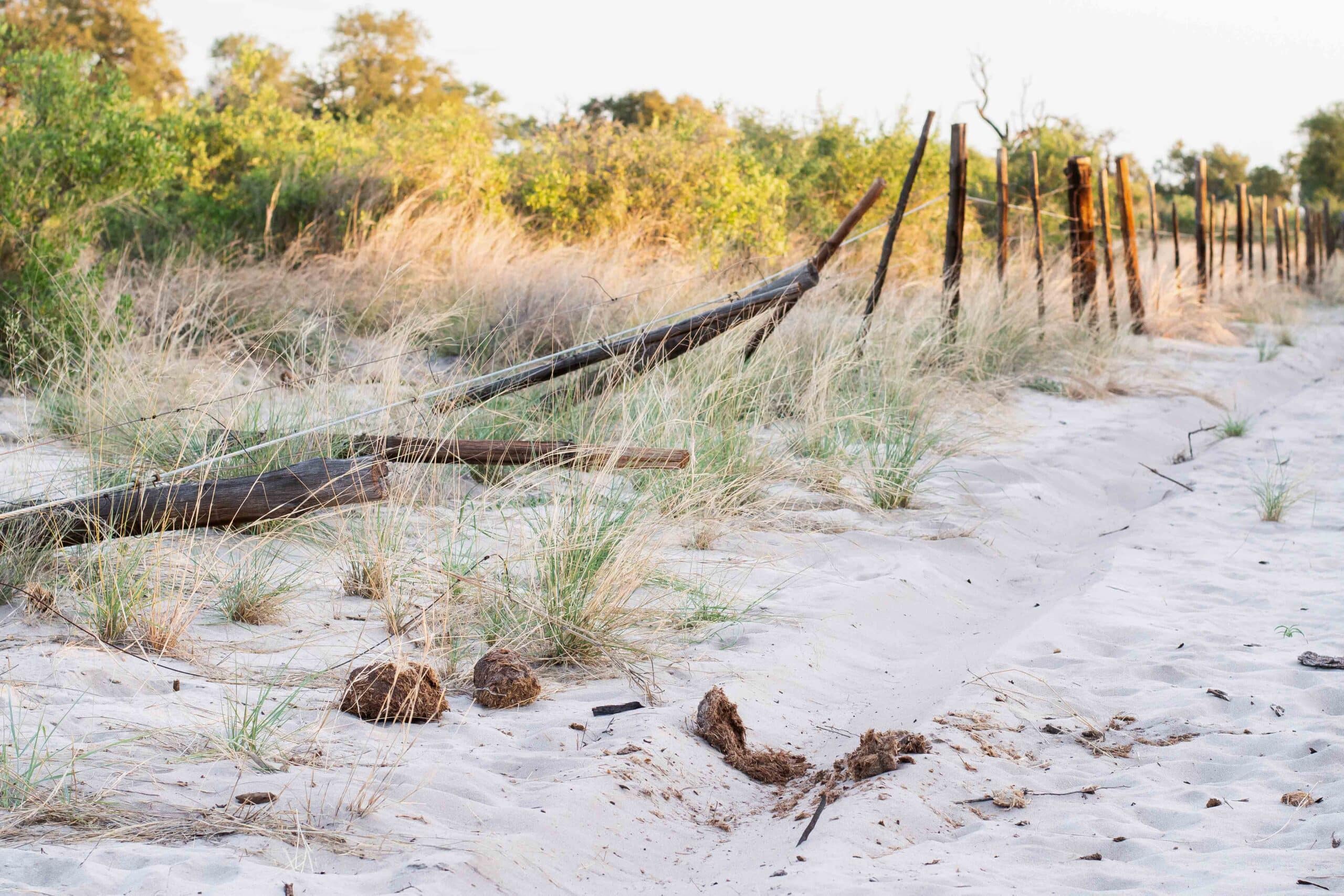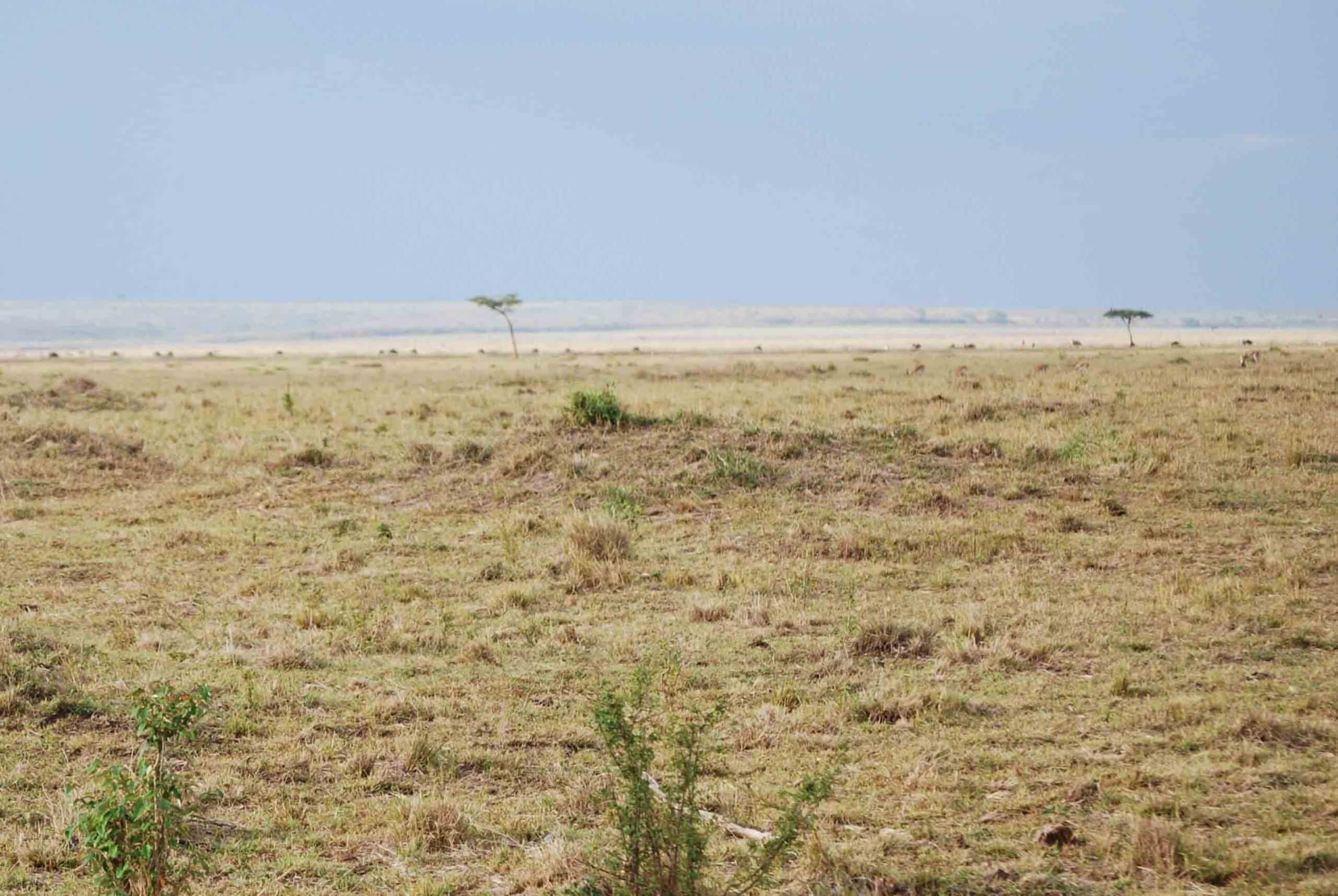
In this article, Liana Kindermann, Alexandra Sandhage-Hofmann, Wulf Amelung, Jan Börner, J., Ezequiel Fabiano, Maximilian Meyer and Anja Linstädter (Project A01 Future Carbon Storage) and Magnus Dobler (University of Potsdam) examine how agricultural intensification and wildlife conservation affect carbon storage in an African savanna. Their study finds that land-use change alters disturbance regimes, leading to sharp declines in aboveground carbon storage but potential increases in soil organic carbon storage. These results highlight the need for tailored carbon management strategies in dryland ecosystems.
Natural and Human Disturbances Have Non-Linear Effects on Whole-Ecosystem Carbon Storage in an African Savanna
By Liana Kindermann, Alexandra Sandhage-Hofmann, Wulf Amelung, Jan Börner, Magnus Dobler, Ezequiel Fabiano, Maximilian Meyer and Anja Linstädter
Abstract
Uncertainties in carbon storage estimates for disturbance-prone dryland ecosystems hinder accurate assessments of their contribution to the global carbon budget. This study examines the effects of land-use change on carbon storage in an African savanna landscape, focusing on two major land-use change pathways: agricultural intensification and wildlife conservation, both of which alter disturbance regimes. By adapting tree inventory and soil sampling methods for dryland conditions, we quantified aboveground and belowground carbon in woody vegetation (AGC and BGC) and soil organic carbon (SOC) across these pathways in two vegetation types (scrub savanna and woodland savanna). We used Generalized Additive Mixed Models to assess the effects of multiple environmental drivers on AGC and whole-ecosystem carbon storage (Ctotal). Our findings revealed a pronounced variation in the vulnerability of carbon reservoirs to disturbance, depending on land-use change pathway and vegetation type. In scrub savanna vegetation, shrub AGC emerged as the most vulnerable carbon reservoir, declining on average by 56% along the conservation pathway and 90% along the intensification pathway compared to low-disturbance sites. In woodland savanna, tree AGC was most affected, decreasing on average by 95% along the intensification pathway. Unexpectedly, SOC stocks were often higher at greater disturbance levels, particularly under agricultural intensification, likely due to the preferential conversion of naturally carbon-richer soils for agriculture and the redistribution of AGC to SOC through megaherbivore browsing. Strong unimodal relationships between disturbance agents, such as megaherbivore browsing and woodcutting, and both AGC and Ctotal suggest that intermediate disturbance levels can enhance ecosystem-level carbon storage in disturbance-prone dryland ecosystems. These findings underline the importance of locally tailored management strategies–such as in carbon certification schemes–that reconcile disturbance regimes in drylands with carbon sequestration goals. Moreover, potential tradeoffs between land-use objectives and carbon storage goals must be considered.
Reference
Kindermann, L., Sandhage-Hofmann, A., Amelung, W., Börner, J., Dobler, M., Fabiano, E. C., Meyer, M., Linstädter, A. 2025. Natural and Human Disturbances Have Non-Linear Effects on Whole-Ecosystem Carbon Storage in an African Savanna. Global Change Biology. 31(4), e70163 DOI