By Theo Aalders, CRC-TRR Project C03 Green Futures
When a group of Geographers is asked to plan a workshop, you will end up spending more time climbing rocks than sitting in conference room. This is a lesson that the historians, political scientists, ecologists, and anthropologists of Project C03’s “Travelling Workshop” had to learn the hard way – and perhaps even enjoyed. With this two-week workshop in September and October 2022, we began the project’s fieldwork-phase the only way we knew how: by actually being in the field.

The team of the two co-PIs Eric Kioko and Detlef Müller-Mahn, comprising researchers from five different disciplines and three different countries visited future research sites in Kenya and Tanzania. What brought all of us together was a peculiar common interest: infrastructure projects that don’t exist. Specifically, we set out to visit a number of sites where hydropower dams were envisioned, planned, promised, or under construction. These “ghost projects”, we believe, are interesting arenas, in which different visions of the future encounter each other and struggle to become material reality.
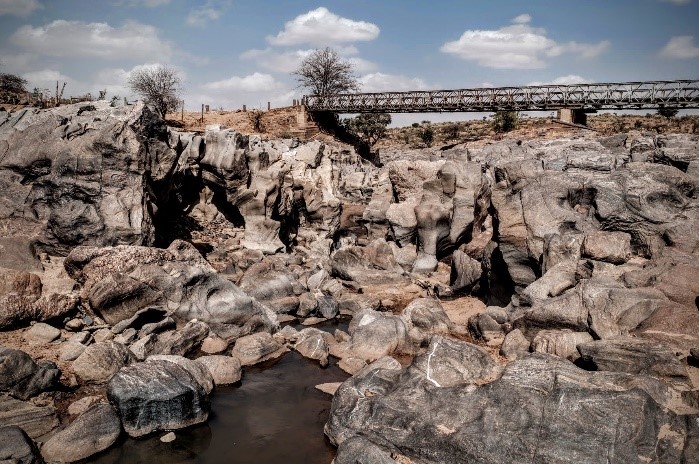
The first site we set out to visit has the poetic name “Crocodile Jaws” and is located at the Ewaso Ngiro river separating Isiolo and Laikipia County. Starting from Nairobi, we first visited the CETRAD office in Nanyuki, to meet our project partners there. Via a scenic route and the small town of Oldonyiro we made our way to the proposed dam site. If constructed, the surrealist rock formations that give Crocodile Jaws its name would be entirely submerged under the reservoir, which would then supply a planned resort city close to Isiolo with both water and power. Now, however, as the site of the resort city has been moved, the dam at Crocodile Jaws might never be constructed, leaving uncertainty to the inhabitants of the area as well as Arne, the PhD student who is currently conducting his research about this dam site.

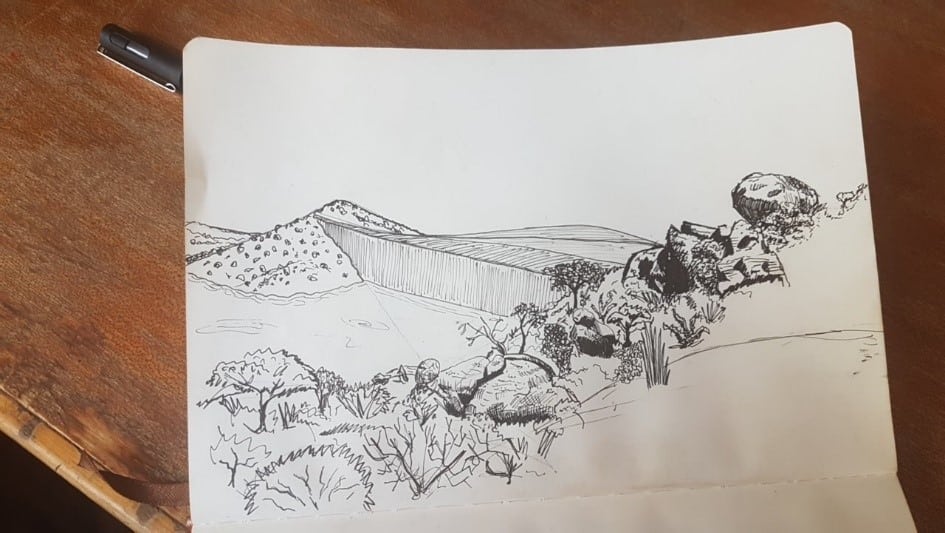
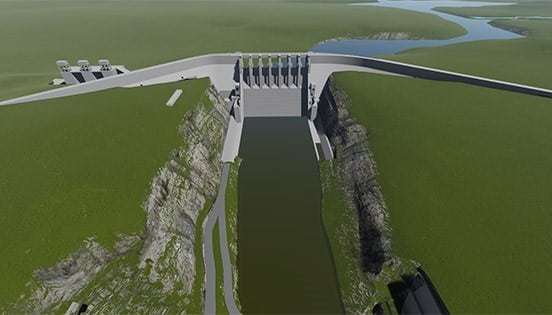
In Tanzania, the team then visited a proposed dam site close to the village Kidunda at the Ruvu river. Similarly to the site at Crocodile Jaws, the water and power generated at this site will primarily be used far way, in Dar es Salaam. Other than the Kenyan example, a some “auxiliary infrastructure” was already visible around Kidunda: road construction was progressing and tall transmission towers were erected in anticipation of the power generated from the dam. In the village, we met with some local authorities and a village elder, who kindly showed us the proposed site of the dam and told us about the hopes and uncertainties connected to the project.


Having seen two unbuilt or unfinished “ghost projects”, the team wanted to get an impression on what these dams might look like if they are ever finished in future. For that purpose, we travelled to Mtera Dam, south of Tanzania’s capital Dodoma, where we could witness the durability of technology from the 1970s – the control room looked like the bridge on the first season of Star Trek. The dam’s primary purpose is to regulate water flow for the Kidatu dam, which is located downstream and has more than double the power output (204MW vs. 80MW).
Both of these dams would be dwarfed by the Nyerere hydropower dam, which our PhD Student Emma Minja is currently studying from a historical perspective. The history of the Nyerere hydropower station reaches as far back as the early 20th century, when the gorge was named after a German engineer who got killed by an Elephant while surveying the site for its potential as a dam site. Over the decades, it appeared in different reincarnations; from a tool for colonial control to a symbol of emancipation. This demonstrates that researching “Future Rural Africa” necessarily also implies a consideration of the past.
The traveling workshop marked a nice start of project C03’s second phase. Having seen each other’s research sites with our own eyes made it much easier to see commonalities and differences, helping to prevent overly siloed work within the project. The conversations during the long (long!) rides across rough terrain inspired and paved the way for different forms of collaboration between project members and partners from Kenya, Tanzania, and Germany. And perhaps most importantly, it was a highly enjoyable experience to spend time with the team on the road, on rocks, and on the way to new “Green Futures”.