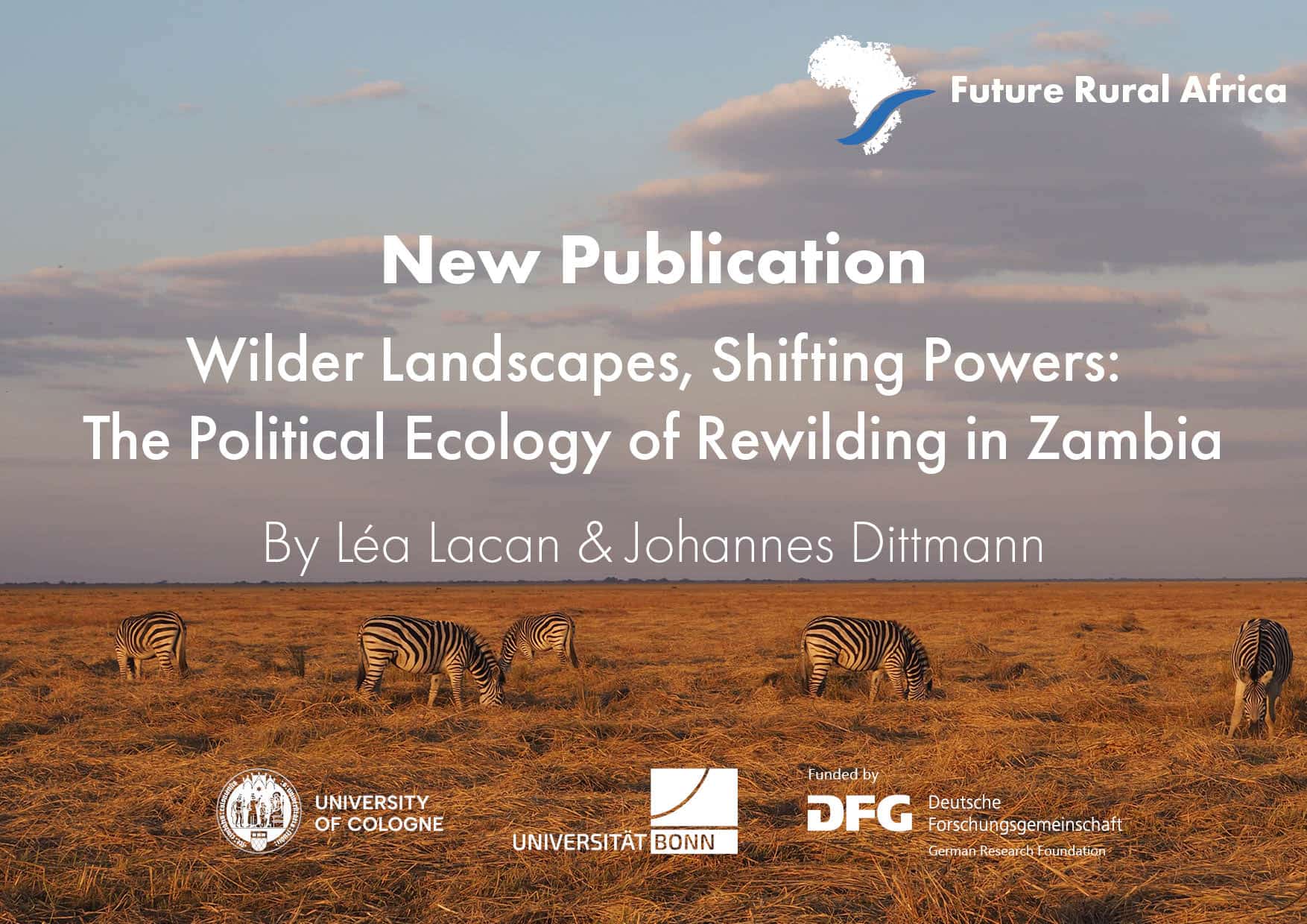
In this article, Léa Lacan and Johannes Dittman, associated reseachers from our sub-projects A04 “Future Conservation” and C03 “Green Futures”, examine rewilding in the Kavango-Zambezi region as both an ecological and political project. They demonstrate how it supports transboundary conservation and development while reshaping power relations among NGOs, governments, and local communities. The authors highlight that rewilding is largely top-down but still creates space for traditional authorities and communities to negotiate influence.
Wilder Landscapes, Shifting Powers: The Political Ecology of Rewilding in Zambia
By Léa Lacan and Johannes Dittmann
Abstract
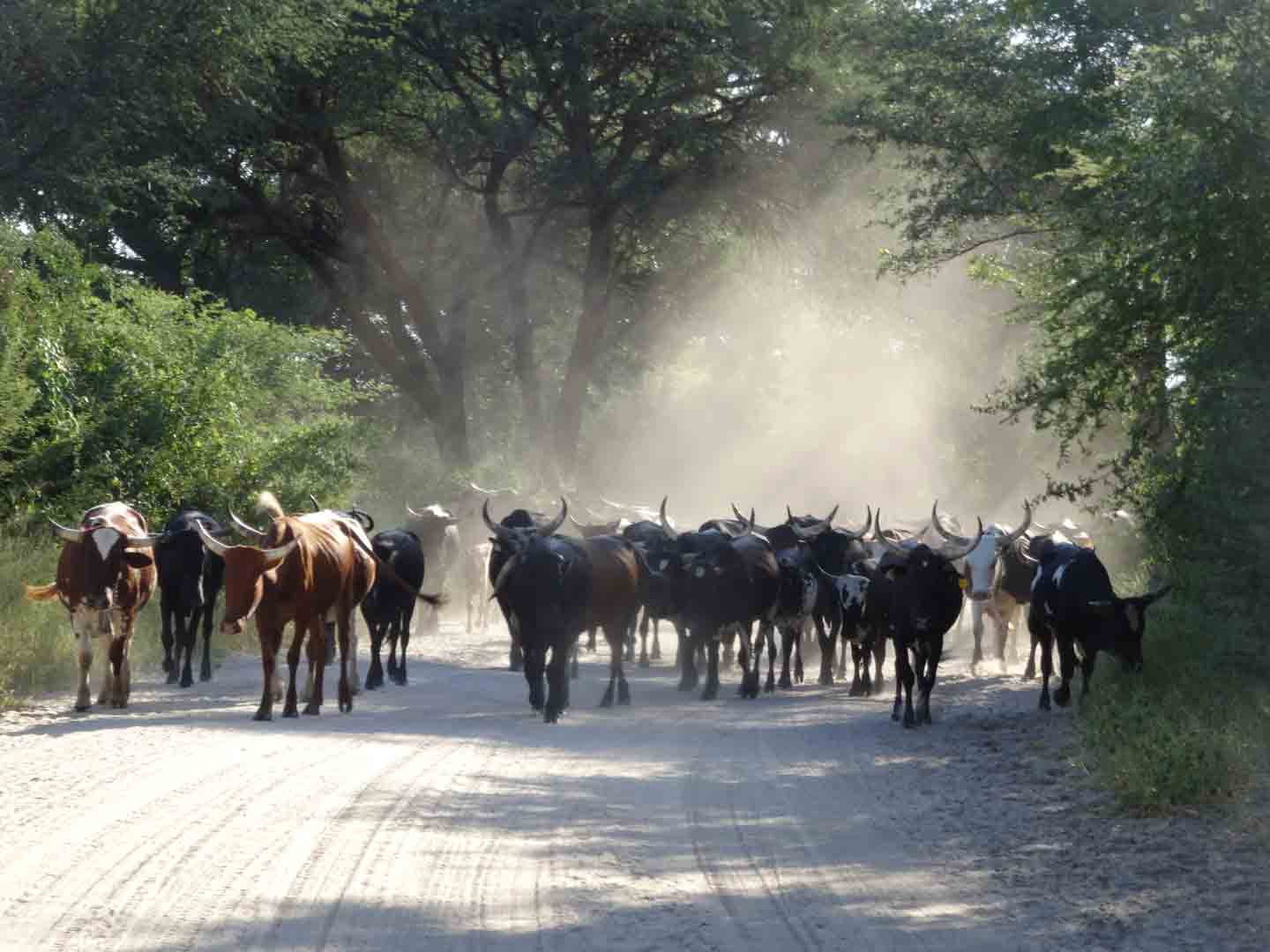
Rewilding is increasingly popular as a new paradigm for conservation, advocating the return of an autonomous nature, the ‘wild’, in closer coexistence with people. This approach resonates with transboundary conservation initiatives like the Kavango-Zambezi Transfrontier Conservation Area (KAZA) in southern Africa. The Simalaha Community Conservancy in southwestern Zambia is KAZA’s poster child at the local level, showing how rewilding can simultaneously achieve transboundary conservation, economic development, and peaceful coexistence between wildlife and humans. This article proposes a multi-scalar political ecology of rewilding, bringing together ethnographic research at the regional level of KAZA and at the local level in Simalaha. It analyses how rewilding reshapes the political authority of international and regional NGOs, traditional authorities (TAs), local communities and national governments. The article shows that rewilding revitalizes the KAZA conservation vision, but also reactivates power struggles: national states seek to reassert control over the expansion of conservation in customary lands, NGOs backed by international donors consolidate their influence through partnerships with TAs, and TAs leverage these dynamics to gain new authority. Rewilding thus remains largely a top-down process, steered by NGOs and governments, yet simultaneously opens up new opportunities for traditional authorities and communities to negotiate power in Simalaha and KAZA.
Reference
Lacan, L., Dittmann, J. 2026. Wilder landscapes, shifting powers: the political ecology of rewilding in Zambia. Journal of Political Ecology 33(1): 8731. DOI