Conrad Schetter, Lucy Massoi and Venance Shillingi (Project B03 “Violent Futures”) analyse conflict dynamics between Parakuyo pastoralists and Kaguru and Sagara farmers in Kilosa, Tanzania, in the context of the Standard Gauge Railway (SGR) construction since 2018. They find that railway-related jobs—especially for young pastoralist warriors—have helped ease tensions and foster cooperation between groups that previously experienced violent conflict, though the long-term sustainability of this peace is uncertain.
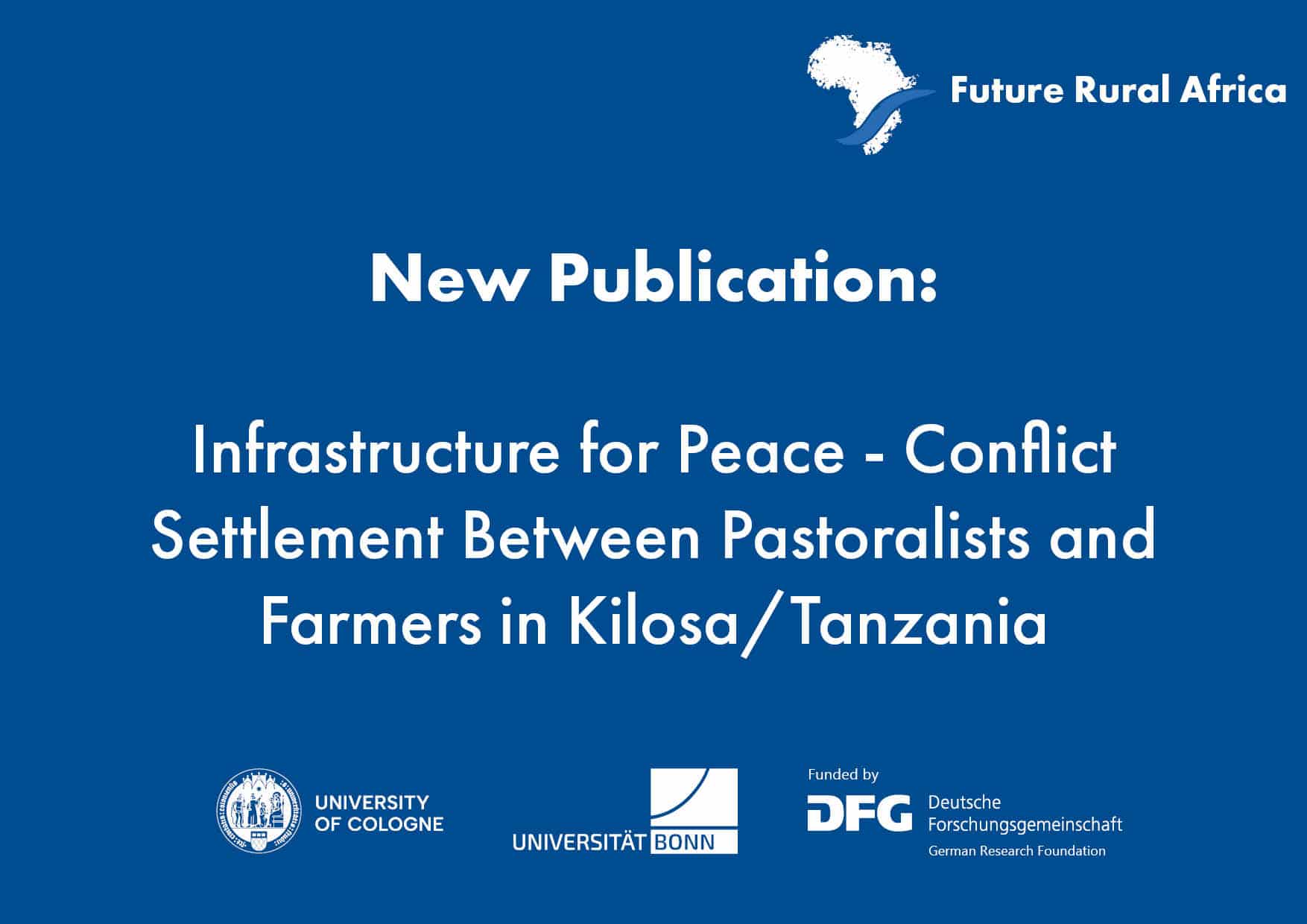
Infrastructure for peace: conflict settlement between pastoralists and farmers in Kilosa/Tanzania
By Conrad Schetter, Lucy Massoi and Venance Shillingi
Abstract
This article examines the conflict dynamics between Parakuyo pastoralists and Kaguru and Sagara farmers in Kilosa, Tanzania. It focuses on the socioeconomic transformation generated by the construction of the Standard Gauge Railway (SGR), which began in 2018 and traverses Parakuyo pastoral land. Against the background of the so-called Kilosa killings of the year 2000, when Parakuyo pastoralists murdered 38 farmers, this article investigates how the SGR has affected relationships between pastoralists and farmers. Drawing on qualitative research methods, our study unveils surprisingly that peaceful coexistence between farmers and pastoralists has emerged in recent years, reflected in collaborative arrangements and the mediating role of peace committees. The construction of the SGR has emerged as a decisive turning point by providing employment opportunities for former young Parakuyo warriors (Morans). These jobs relieve economic pressure and promote stability by providing profitable alternative livelihood income to conventional pastoralism. However, the main question that remains is how sustainable these new jobs are and what will happen once construction of the SGR has ended.
Reference
Schetter, C., Massoi, L., & Shillingi, V. 2025. Infrastructure for peace: conflict settlement between pastoralists and farmers in Kilosa/Tanzania. Journal of Eastern African Studies, 19(4), 579–600. DOI