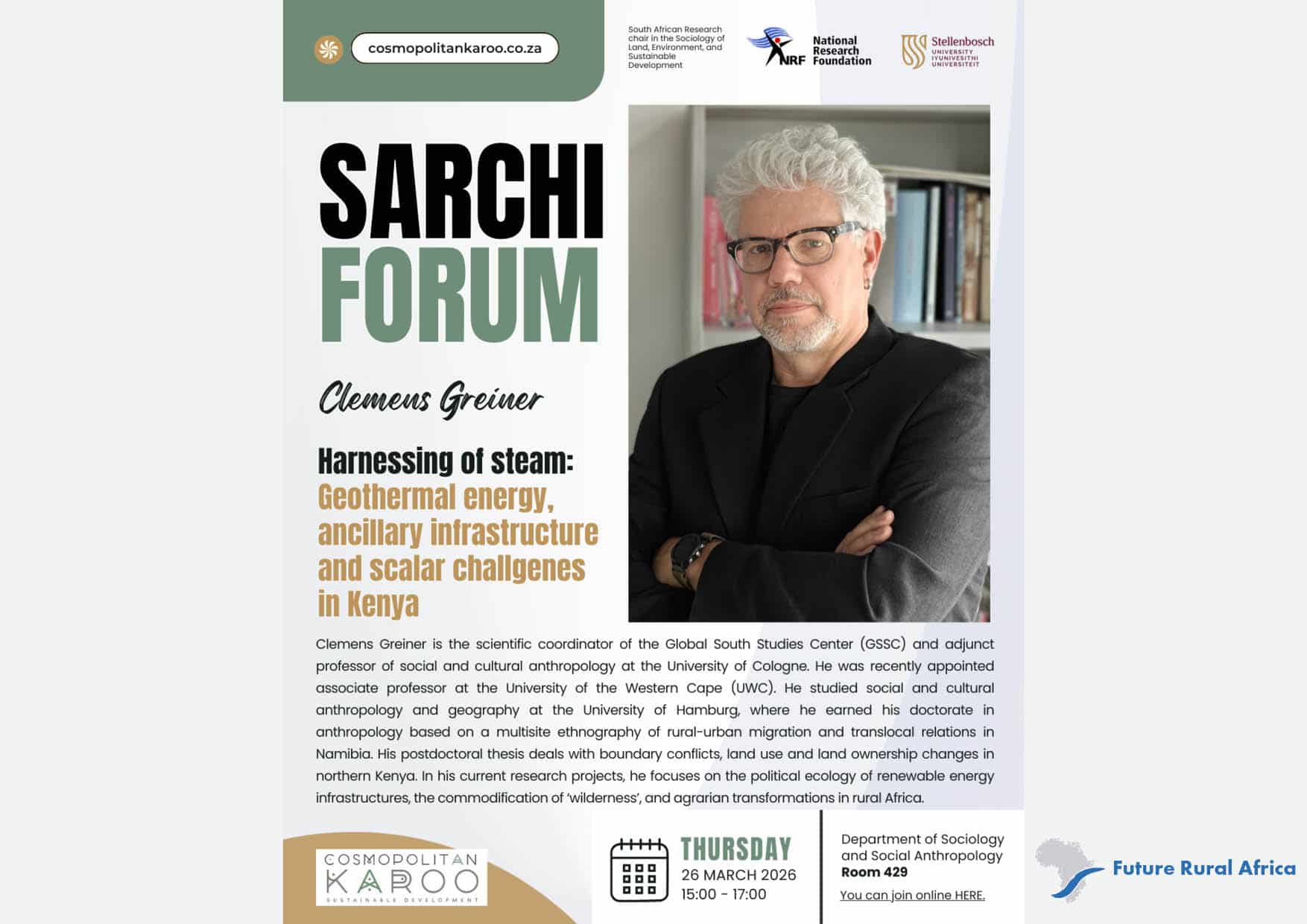
Thu | March 26th, 2026 | 15:00 (SAST)
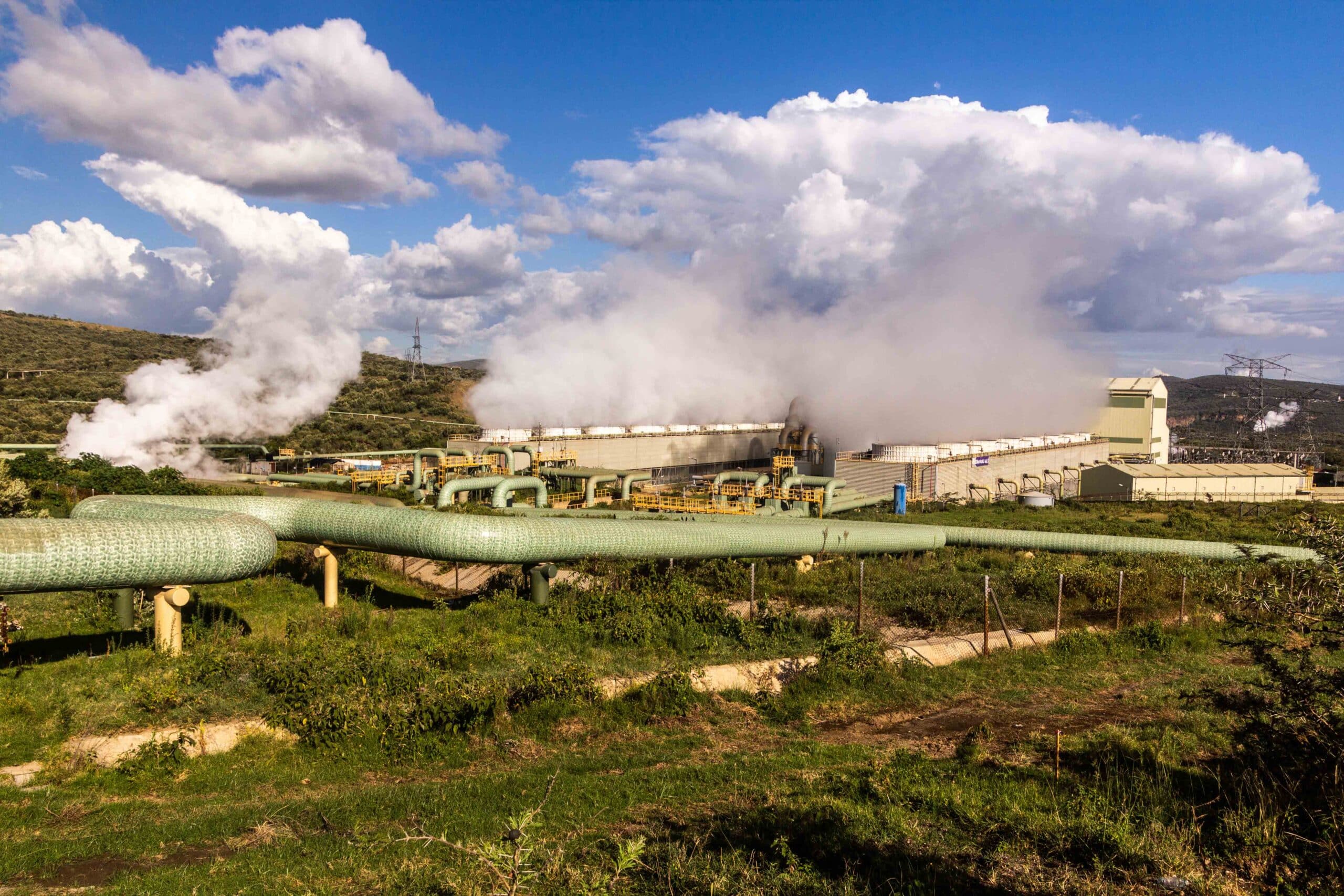
Clemens Greiner (Project C02 “Energy Futures”) will be presenting his project’s insights on geothermal energy in Kenya in the Cosmopolitan Karoo Research Forum at Stellenbosch University.
The event takes place at Stellenbosch University’s Department of Sociology and Social Anthropology, room 429 at 15:00 (South African Standard Time) and will be streamed online.
Click here to join online.
Abstract
Harnessing of Steam: Geothermal Energy, Ancillary Infrastructure and Scalar Challenges in Kenya
The generation of green energy poses a complex challenge that is sometimes characterized as a double bind between local welfare and global climate goals. In particular, renewable energy technologies consume large areas of land due to their comparatively low energy density, which can lead to land conflicts, displacement, and environmental pollution, especially in marginalized rural areas. Using the example of geothermal energy in Kenya, I would like to show in this presentation that renewable energy projects do not necessarily have to lead to such “green sacrifice zones” but may also generate local benefits, particularly through the development of extensive ancillary infrastructure. Geothermal energy now accounts for nearly 50% of Kenya’s electricity mix, and the country is on the verge of joining the so-called “1 gigawatt club” of the world’s largest geothermal producers. The presentation is based on years of research into the development of geothermal energy in Kenya, the resource-related knowledge base that is emerging there, and the impact of exploration and production on local communities.
Clemens Greiner is the scientific coordinator of the Global South Studies Center (GSSC) and adjunct professor of social and cultural anthropology at the University of Cologne. He was recently appointed associate professor at the University of the Western Cape (UWC). He studied social and cultural anthropology and geography at the University of Hamburg, where he earned his doctorate in anthropology based on a multisite ethnography of rural-urban migration and translocal relations in Namibia. His postdoctoral thesis deals with boundary conflicts, land use and land ownership changes in northern Kenya. In his current research projects, he focuses on the political ecology of renewable energy infrastructures, the commodification of ‘wilderness’, and agrarian transformations in rural Africa.