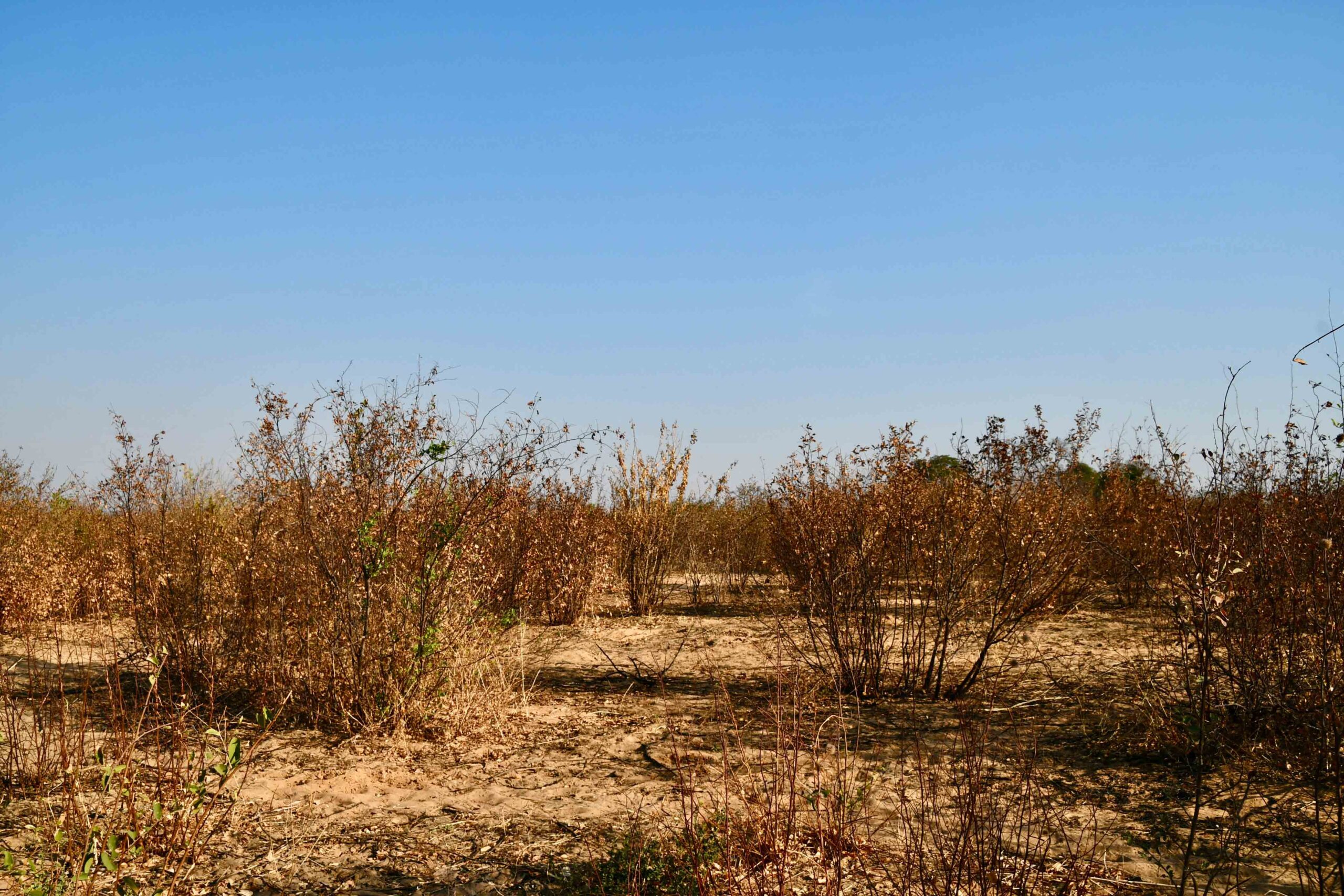
This study with participation from Future Rural Africa researchers Liana Kindermann and Anja Linstädter (Project A01 “Future Carbon Storage“) focuses on identifying the conditions under which invasive plant species are able to spread in rangelands across the world’s dryland regions. The analyses show that introduced plant species often grow faster than native species. However, they can only realize this growth advantage when sufficient nutrients are available, when native grasses have been weakened by overgrazing, and when plant and herbivore biodiversity is low or impaired.
Taken together, the findings suggest that maintaining healthy and stable grazing ecosystems in drylands — ecosystems that provide the foundation for local livelihoods — requires preventing inappropriate and excessive grazing while simultaneously supporting native biodiversity in both plants and animals. Only by combining sustainable grazing management with biodiversity conservation can the spread of harmful invasive plant species be reduced or prevented.
Abiotic and biotic controls of non-native perennial plant success in drylands
By Soroor Rahmanian, Nico Eisenhauer, Yuanyuan Huang, Liana Kindermann, Anja Linstädter et al.
Abstract
Drivers of non-native plant success in drylands are poorly understood. Here we identify functional differences between dryland native and non-native perennial plants and assess how biotic, abiotic and anthropogenic factors shape the success of the latter. On the basis of plant community and functional trait data from 98 sites across 25 countries, we report a total of 41 non-native plant species at 31 sites. Non-natives tend towards faster growth strategies than natives. Non-native plant richness is higher at sites with greater grazing pressure and under environmental conditions associated with higher soil fertility, decomposition and fungal richness—conditions that tend to occur in less arid regions—and lower where native plant and herbivore richness are greater. Non-native plant cover correlates positively with grazing pressure and negatively with native plant richness. Taken together, our results suggest that non-native plant success in drylands is facilitated when high grazing pressure coincides with elevated resource availability. Such context-dependence of non-native plant success and linkages with native plant and herbivore diversity highlight the need for managing grazing and conserving biodiversity across the world’s drylands.
Reference
Rahmanian S., Eisenhauer N., Huang Y., […] Kindermann L., […] Linstädter A. et al. 2026. Abiotic and biotic controls of non-native perennial plant success in drylands. Nat Ecol Evol (2026). DOI