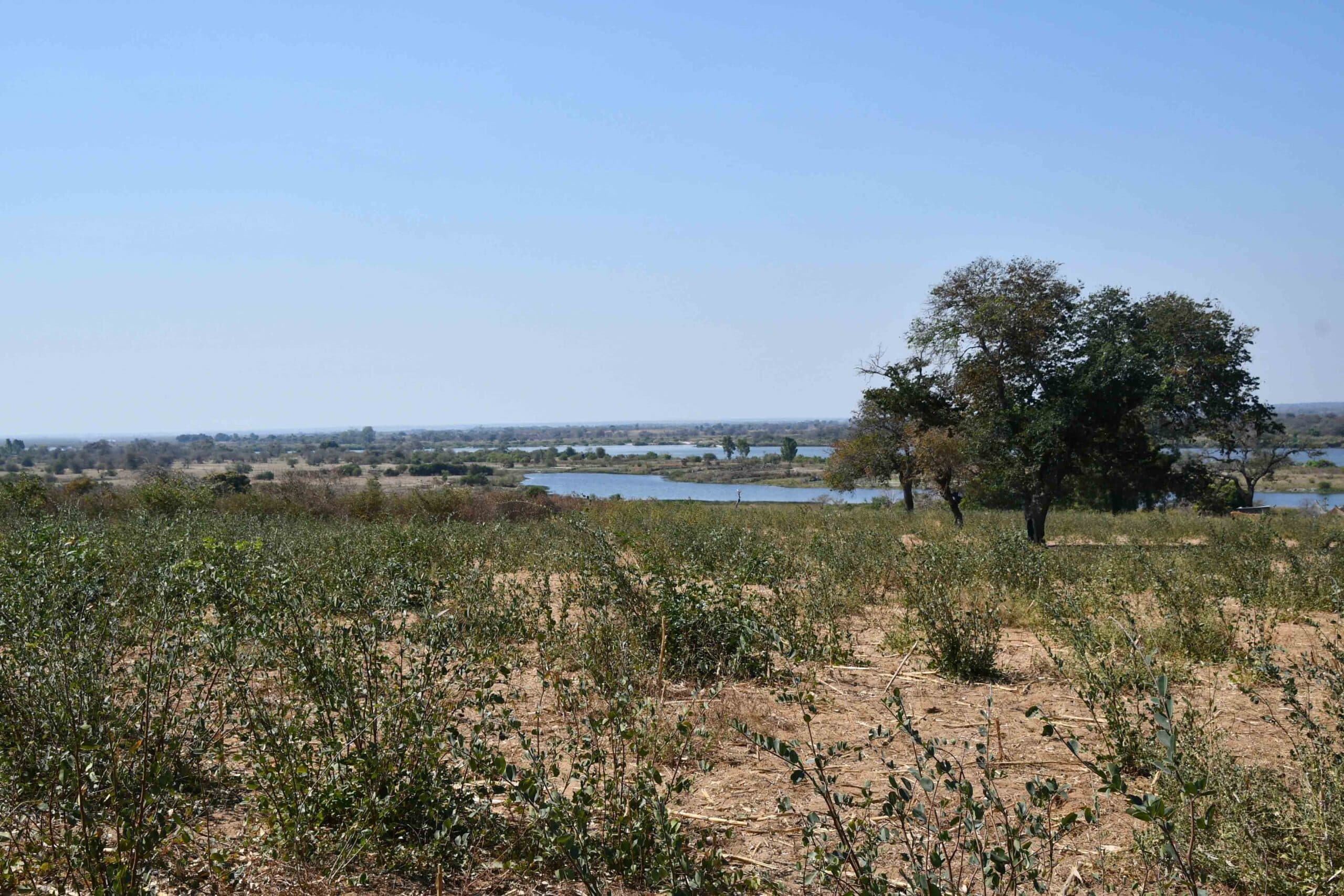
This new publication is a collaborative effort of researchers from our sub-project A01 “Future Carbon Storage” Alexandra Sandhage-Hofmann, Liana Kindermann, Anja Linstädter, Jan Börner, Lydia Chabala in cooperation with Bisrat Gebrekidan (Project A03 “Agro-Futures”), Mira Foerster (University of Geisenheim) and Rebecca Reuß (University of Bonn). The study examines how soil fertility and farm management practices affect smallholder farmers in Southern Africa, and how these factors are linked to household wealth. It also highlights that wealthier farmers may have better access to higher-quality land, which can make it difficult to separate the effects of wealth from the natural quality of the soil.
Soils, woody plants and farm-household wealth: Context-specific links in Southern Africa
By Alexandra Sandhage-Hofmann, Mira Foerster, Rebecca Reuß, Liana Kindermann, Anja Linstädter, Jan Börner, Bisrat Gebrekidan, Lydia Chabala, Wulf Amelung
Abstract
In Southern Africa, agriculture is the primary income source for many people. However, smallholder farmers face challenges with low soil fertility and demanding field management. Soil fertility is determined by inherent soil properties as well as by field management, specifically vegetation and soil management. Management requires economic resources and thus varies with farm-household wealth. Wealthier farmers may have preferential access to high-quality agricultural land, which can confound the relationship between soil quality and wealth.
Reference
Sandhage-Hofmann, A., Foerster, M., Reuß, R., Kindermann, L., Linstädter, A., Börner, J., Gebrekidan, B.H.V., Chabala, L., Amelung, W. Soils, woody plants and farm-household wealth: Context-specific links in Southern Africa, Agricultural Systems,Volume 234, 2026. DOI