This newly published interdisciplinary study brings together researchers from multiple disciplines and institutions, including Ugo Arbieu (Université Paris-Saclay), Katrin Böhning-Gaese (Helmholtz Centre for Environmental Research), and members of the Future Rural Africa consortium: it was authored by Magnus Dobler, Liana Kindermann, Anja Linstädter and Steffanie Mantik from our sub-project A01 “Future Carbon Storage” and co-authored by Javier Revilla Diez and Lucas Rutina (C01 “Future in Chains”).
Their study explores how different stakeholder groups value wildlife in Namibia’s Zambezi Region. By comparing the perceptions of smallholder farmers with the preferences of safari tourists, the authors show that the species most desired by visitors are often those creating the greatest challenges for local livelihoods. Combining ecosystem services, ecosystem disservices, and stakeholder perspectives, the paper offers a novel framework for understanding conservation trade-offs and designing more equitable, future-oriented solutions for human–wildlife coexistence.
Ecosystem services and disservices of wild and domestic mammals: Contrasting farmers’ perceptions and tourists’ demands in an African coexistence landscape
By Magnus Dobler, Liana Kindermann,Ugo Arbieu, Katrin Böhning-Gaese, Javier Revilla Diez, Lucas Rutina, Anja Linstädter
Abstract
In social-ecological systems of sub-Saharan Africa, wild and domestic mammals are key providers of ecosystem services (ESs) and disservices (EDSs), directly shaping local livelihoods. In coexistence landscapes, abundant wildlife sustains tourism economies while increasing the risk of human-wildlife conflict (HWC) for smallholder farmers due to trade-offs in ecosystem (dis-)service provision. Despite growing interest in ESs and EDSs, their joint analysis across mammal assemblages remains rare, and quantitative assessments of how mammal species are perceived differently by societal groups—such as farmers and tourists—remain limited.
To address this gap, we investigated how smallholder farmers in Namibia’s Zambezi Region perceive wild and domestic mammals in terms of ESs and EDSs. Semi-structured interviews were used to assess perceived (dis-)service provision across species, identify perception-based provider groups, and derive associated HWC dimensions. Contrasting these perceptions with the preferences and demands of safari tourists allowed to assess mismatches underpinning ecosystem (dis-)service trade-offs.
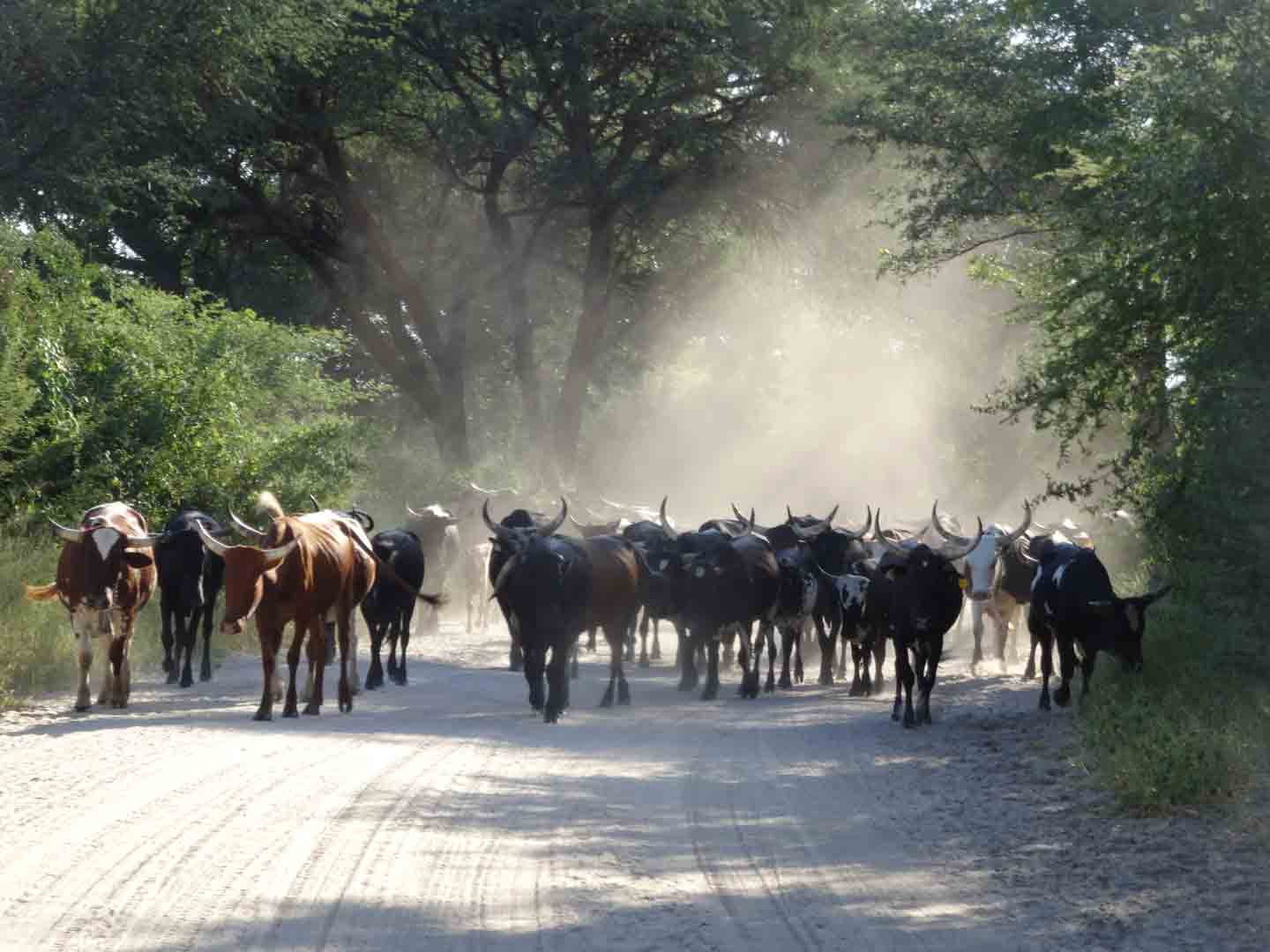
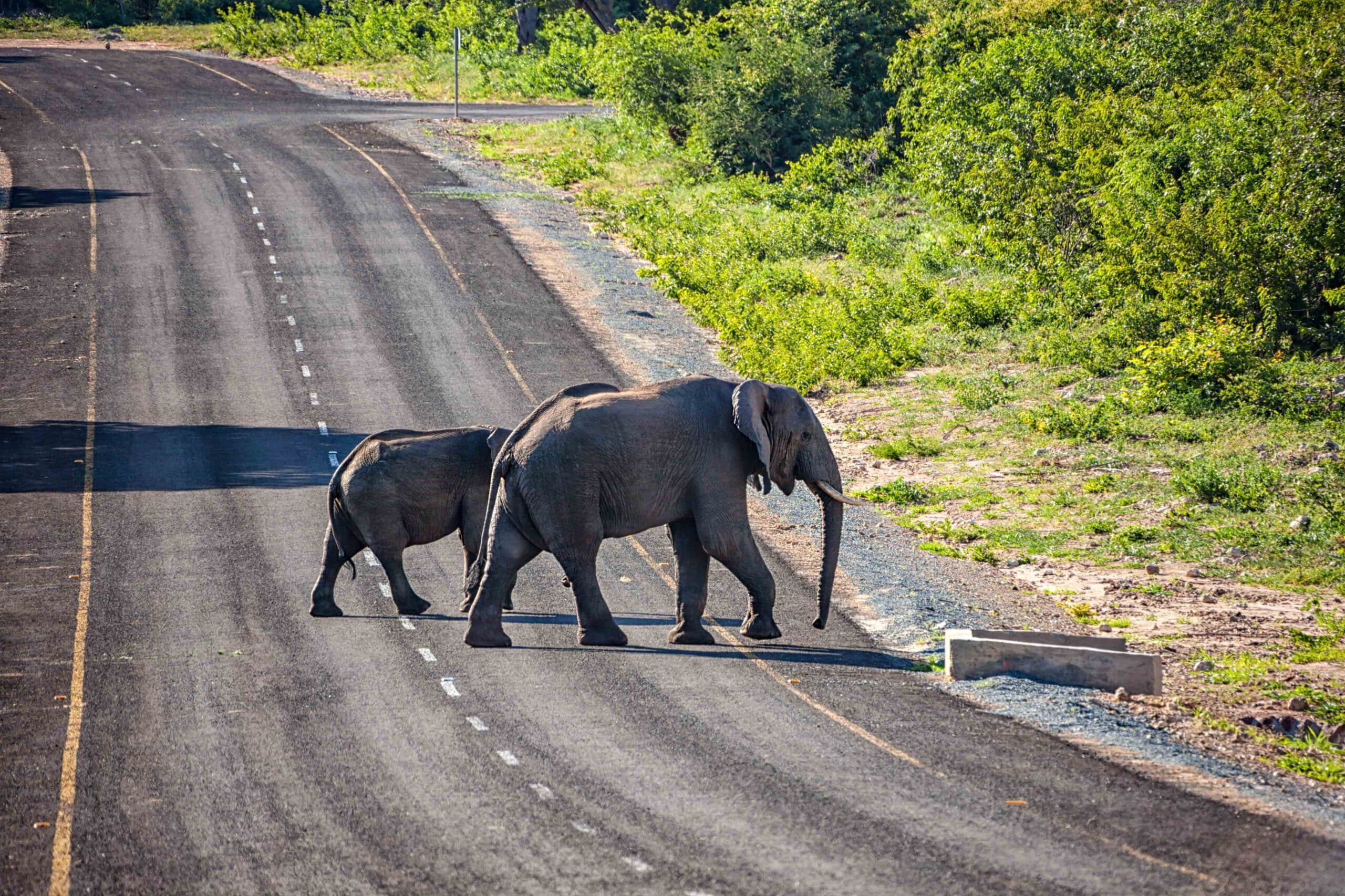
Farmers identified six provisioning and cultural ESs, and three EDSs related to crop and infrastructure damage, risks to human safety, and livestock depredation. We distinguished four farmer-informed mammal groups – domestic, dangerous, ambivalent, and neutral – and identified two HWC dimensions: a farming-wildlife tourism conflict and a livestock-carnivore conservation conflict. Crucially, tourists showed particularly high demand for species strongly associated with either HWC dimension, such as elephants and lions. By integrating stakeholder perspectives, our findings highlight how mismatched species valuations drive trade-offs between conservation and livelihoods, providing a basis for policies that better align wildlife conservation with the needs in coexistence landscapes.
Reference
Dobler, M., Kindermann, L., Mantik, S., Arbieu, U., Böhning-Gaese, K., Revilla Diez, J., Rutina, L., Linstädter, A. 2026. Ecosystem services and disservices of wild and domestic mammals: Contrasting farmers’ perceptions and tourists’ demands in an African coexistence landscape, Ecosystem Services,Volume 80, 2026, DOI