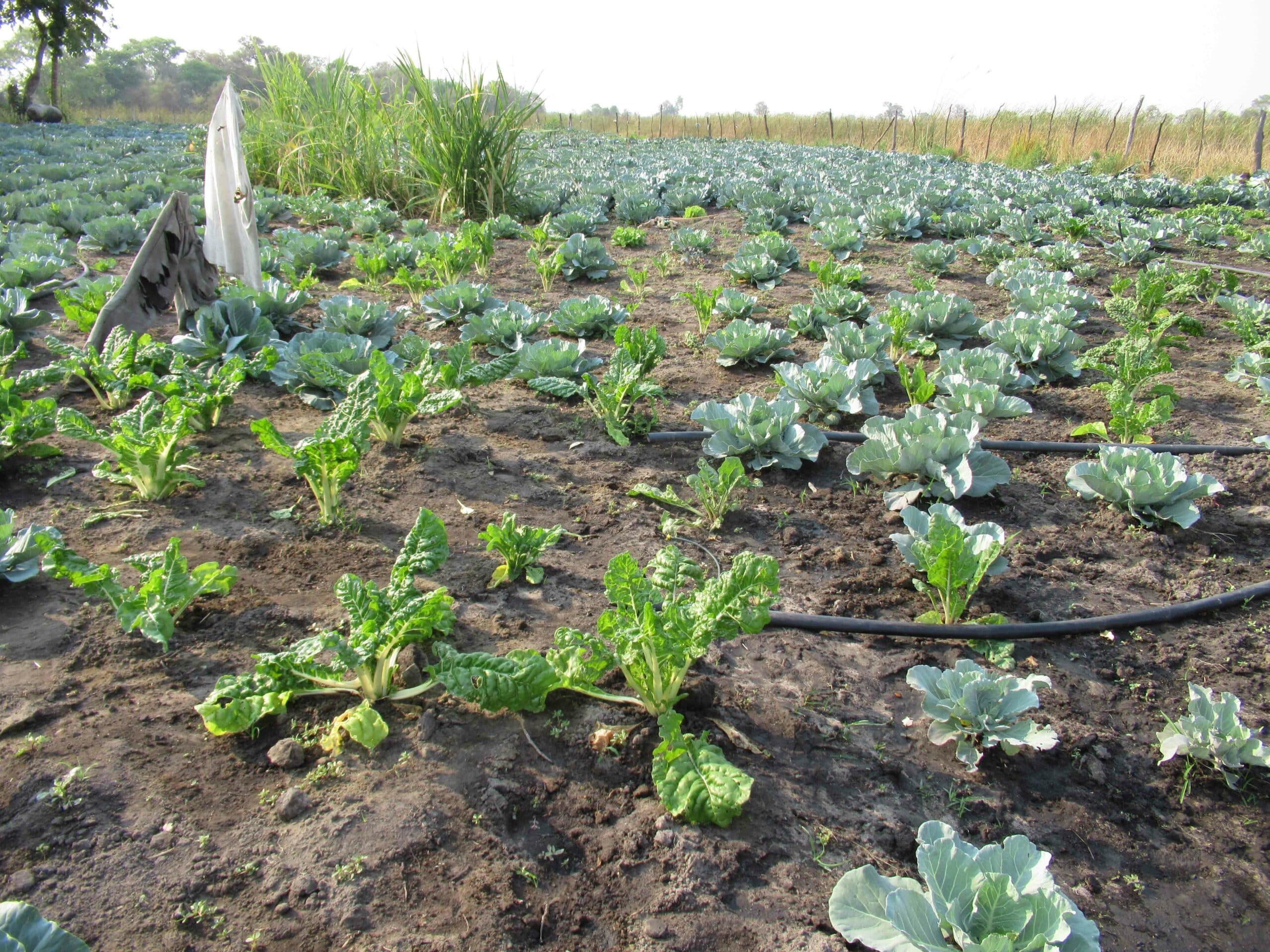
In this study, Saymore Ngonidzashe Kativu, Javier Revilla-Diez and Anna-Katharina Hornidge, researchers from our sub-projects B05 “Science Futures” and C01 “Future in Chains”, argue that demonstration plots in sub-Saharan Africa are not neutral teaching tools but powerful instruments that shape which farming practices and agricultural futures become dominant. Based on research in Tanzania, they show that well-funded private-sector and research-led plots promote input-intensive monoculture farming, while grassroots agroforestry and conservation approaches are marginalized despite supporting local knowledge and ecological diversity.
Demonstration Plots as Assemblages: the Political Ecology of Knowledge Intensive Agricultural Futures in Tanzania
By Saymore Ngonidzashe Kativu, Javier Revilla-Diez and Anna-Katharina Hornidge
Abstract
Demonstration plots (demo plots) are crucial for knowledge dissemination and knowledge production to and with smallholder farmers in sub-Saharan Africa, making them important in rural development. Beyond their agricultural extension function considerations, their political and ecological dynamics remain undertheorized. Drawing on qualitative empirical data across Mbeya Region, Tanzania, we analyze the political ecology of different demonstration plots as assemblages deployed by private-sector actors, NGOs/grassroots organizations, and research institutions, to shape agricultural transformation. Our study reveals stark power asymmetries: private sector and research-led demo plots, strategically located and strongly resourced, dominate both physical and discursive landscapes. Their alliance building and branding practices territorialize monocultures, input-dependent farming as aspired futures. Conversely, the more conservation-oriented grassroots demo plots, despite retaining agroforestry socioecological systems, fostering local knowledge and diverse practices, are marginalized by resource constraints and limited institutional support, exposing their territories to constant erasure. Using assemblage theory, we scrutinize demo plots as active sites of socio-technical selection, configuring actors, spaces, and knowledge systems in ways that privilege market integration through intensification, while sidelining alternatives. The analysis challenges prevailing narratives of demo plots as neutral (even apolitical) pedagogical tools, instead arguing to understand them as instruments of power that determine which agricultural futures materialize.
Reference
Kativu, S. N., Revilla-Diez, J., & Hornidge, A. K. 2026. Demonstration plots as assemblages: the political ecology of knowledge intensive agricultural futures in Tanzania. Agriculture and Human Values, 43(2), 86. DOI