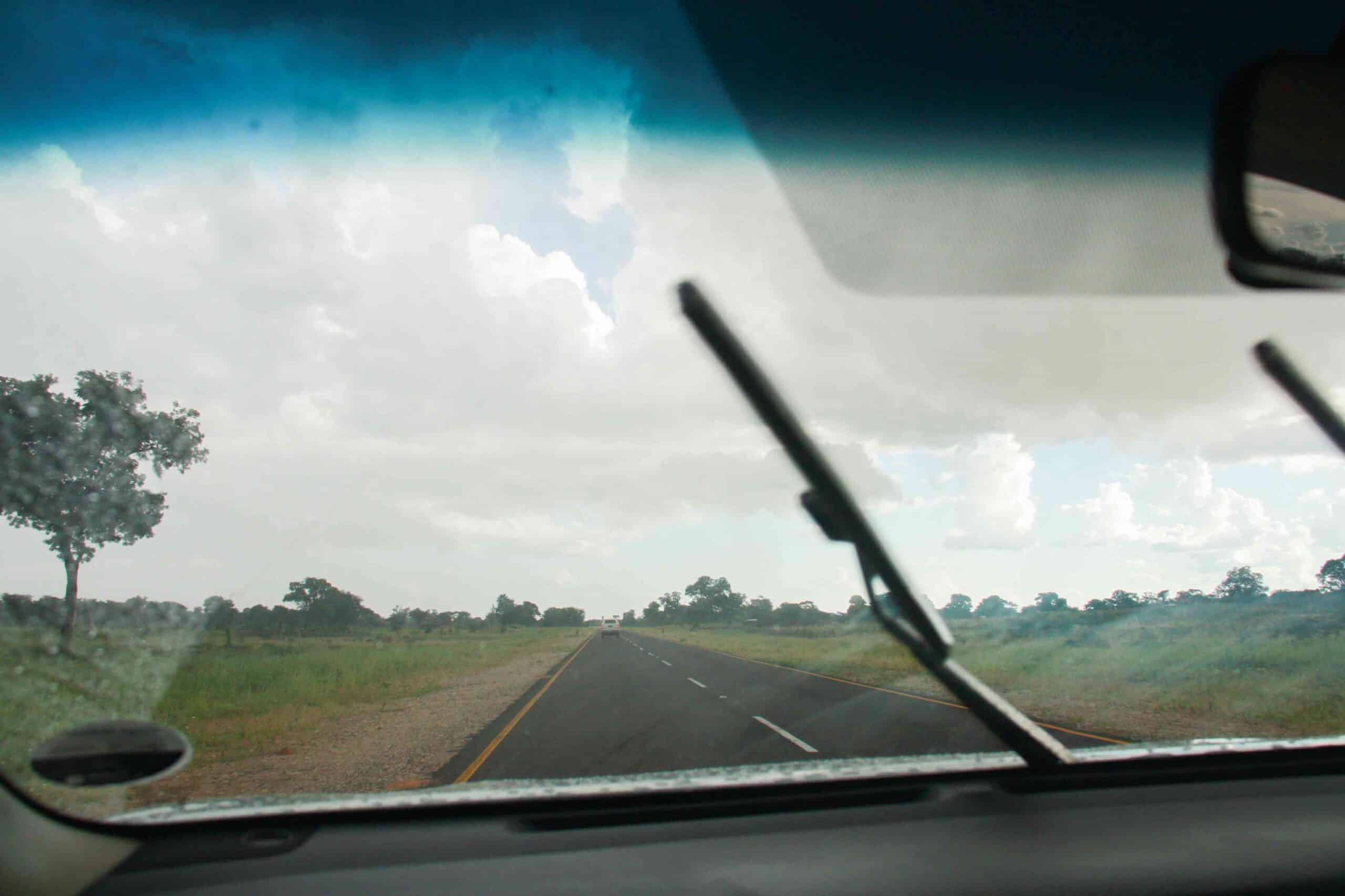
In recently published article, Justina Nangolo (University of Cologne), Christoph Hütt (University of Cologne), Georg Bareth (Project A05 Future Roads) and Javier Revilla Diez (Project C01 Future in Chains) compare land use transformation along the Walvis Bay – Ndola – Lubumbashi Development Corridor (WBNLDC) and regional roads in Namibia’s Zambezi Region using satellite imagery. The results indicate that while built-up and cultivated areas expanded significantly, this growth was more pronounced along regional roads, suggesting they are more effective in driving local development and improving livelihoods than international corridors.
Abstract
Despite the increasing popularity of development corridors, their effectiveness in promoting regional development compared to regional roads remains uncertain. This study utilised satellite imagery to compare land use transformation within a 10km corridor effect zone along the Walvis Bay – Ndola – Lubumbashi Development Corridor (WBNLDC) and regional roads in Namibia’s Zambezi Region. Overall, the Zambezi Region experienced a strong increase in built-up areas (+165%) and cultivated land (+136%) between 2000 and 2023 at the expense of forest (−18%) and grasslands (−18%). Cultivated and built-up areas expanded most intensively along regional roads, where most of the population resides, particularly after road tarring. This suggests regional roads drive land use change more effectively. The findings imply that local communities profit more from regional roads, and targeted investment in such infrastructures might be more beneficial to support the region’s food basket goals and improve livelihoods rather than international corridors like the WBNLDC.
Reference
Nangolo, J. T., Hütt, C., Bareth, G., Revilla Diez, J. 2025. Roads to development? A comparison of development corridors vs regional roads in the Zambezi Region, Namibia. Journal of Maps, 21(1), 2462302. DOI