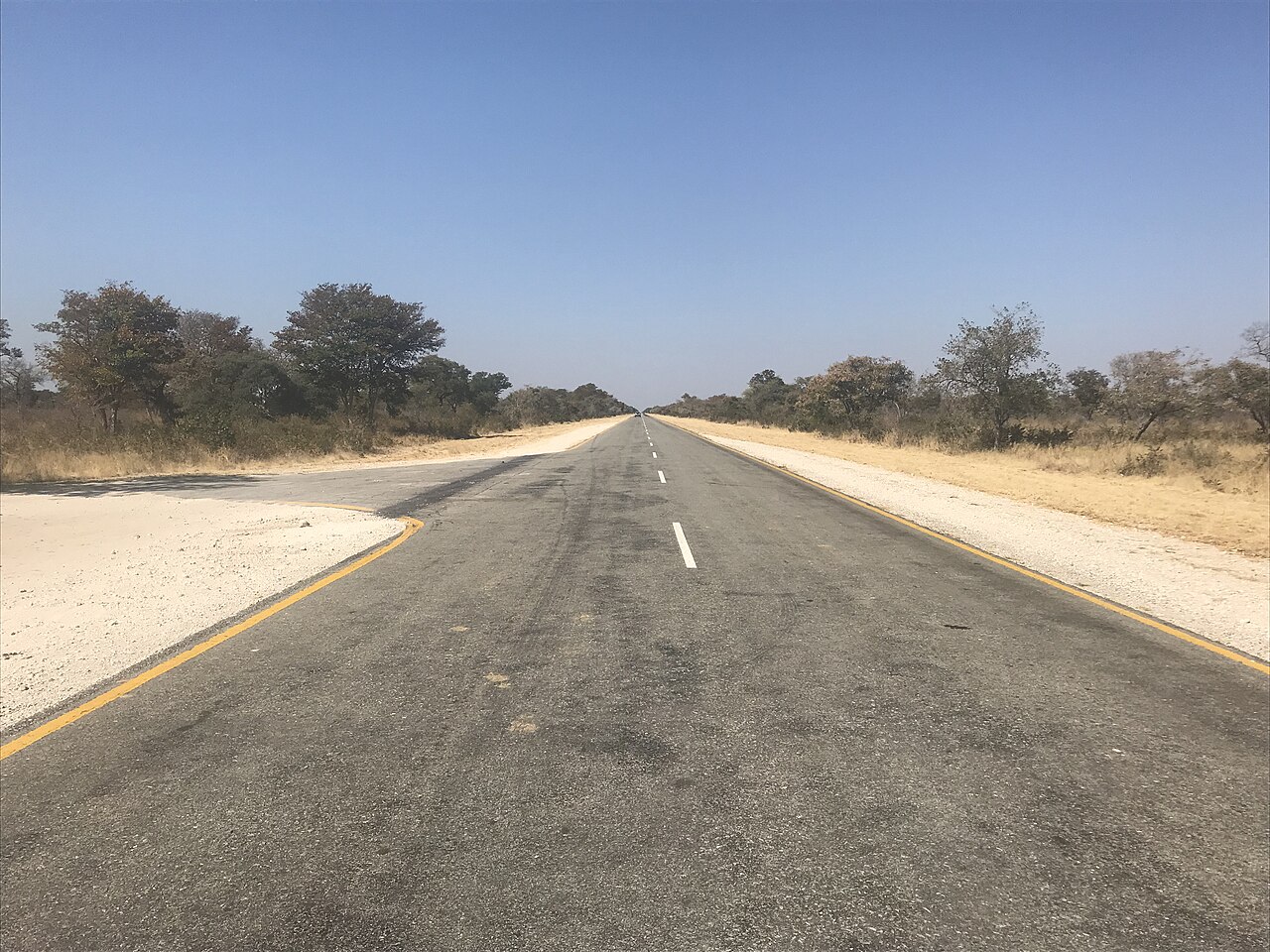
This study by Judith K. Musa, Vincent Moseti and Lisa Biber-Freudenberger (Project A05 “Future Roads”) investigates how road infrastructure influences local communities’ sense of agency in shaping nature-positive futures in Namibia’s KAZA region, using the Nature Futures Framework. It finds that proximity to roads and higher education levels are linked to greater perceived agency, especially regarding instrumental and intrinsic values of nature, highlighting the importance of integrating local perspectives in infrastructure planning.
Role of agency in envisioning future human-nature relationships in the context of road infrastructure development in the Kavango-Zambezi region, Namibia
By Judith K. Musa, Vincent Moseti and Lisa Biber-Freudenberger.
Abstract
Amid growing concerns over climate change and biodiversity loss, there is increasing recognition of the need to reconcile local communities’ economic aspirations with environmental conservation. The Intergovernmental Science-Policy Platform on Biodiversity and Ecosystem Services (IPBES) introduced the Nature Futures Framework (NFF) to foster nature-positive future scenarios. This study explores the impact of road infrastructure on local communities’ agency to envision and achieve desirable futures, focusing on Namibia’s Kavango-Zambezi (KAZA) region. Using semi-structured questions and participatory mapping, we assessed how communities near and far from the Trans-Caprivi highway value nature in present, probable, and desirable future scenarios, as defined by the NFF. We also analyzed the impacts of socioeconomic factors such as age, education, occupation, and gender on shaping these visions. Higher education levels were associated with higher overall agency among respondents, both near and far from roads. Additionally, proximity to roads corresponded with higher agency scores for instrumental (Nature for Society) and intrinsic (Nature for Nature) values, while slightly lower scores were observed for relational (Nature as Culture) values. These patterns suggest spatial and educational factors may influence how individuals perceive their ability to shape future human–nature relationships across different value dimensions. These insights underscore the crucial need to foster nature-positive and socially inclusive futures by systematically integrating local knowledge and stakeholder perspectives into infrastructure planning and decision-making processes.
Reference
Musa, J., Moseti, V., Biber-Freudenberger, L. 2025. Role of agency in envisioning future human-nature relationships in the context of road infrastructure development in the Kavango-Zambezi region, Namibia. Frontiers in Sustainable Food Systems, Volume 9 – 2025, DOI