By Frankline Ndi (Project C02 Energy Futures).
Abstract
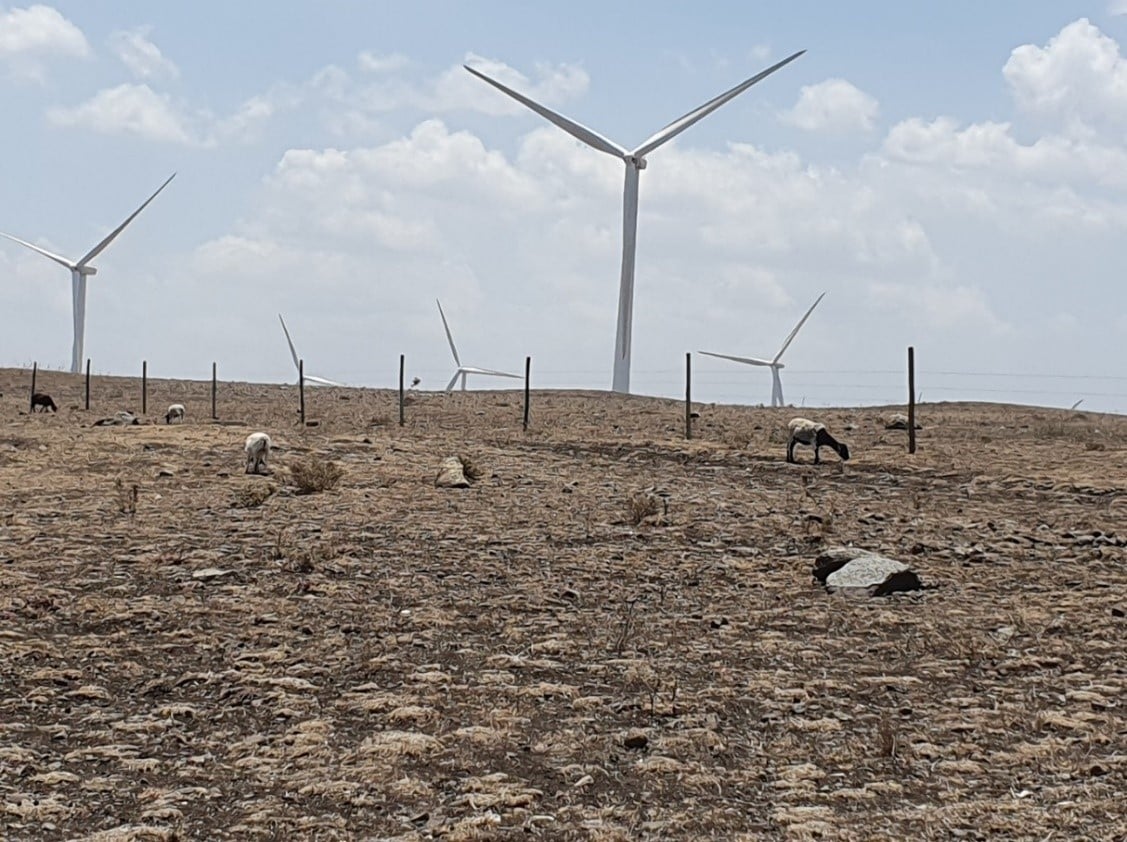
Large-scale renewable energy projects are increasingly being rolled out across rural Kenya, with the government playing a frontline role in attracting energy investors through various state-led and state-centric policies and investment incentives such as feed-in-tariffs and power purchase agreements. While these policies are commendable, and are indeed attracting many private investors, existing studies document how social and environmental justice concerns are often overlooked – sometimes causing local contestations against energy projects. However, to date, there has been less attention given to cases where procedural justice elements (e.g. access to information, access to meaningful participation, access to justice, and respect for local culture) led to a successful land negotiation for energy development without outright conflict. Using a case study in Kenya, this article aims to bridge this gap by showing how a fair application of various elements of procedural justice in land consultation, has facilitated the establishment of the Kipeto wind farm. This qualitative research is based on semi-structured interviews that took place from February to March 2023, with a follow up visit in December the same year, supplemented with review of secondary data sources.
The results indicate that for energy projects to be accommodated in and by communities, access to land must be properly negotiated, particularly with the actual landowners whose livelihoods are most likely to be implicated by the project. Second, local people’s perception of what they regard as a ‘just’ or ‘fair’ process of land consultation constitutes the basis for their acquiescence and compliance.
The study concludes that ensuring a ‘just’ procedure in land consultation with the actual landowners is a key strategy to avoid conflicts. Land investors, governments, and policy-makers who interface and negotiate with communities must ensure the provision of procedural justice, particularly in contexts where local livelihood is tied to land and where land is individually owned. Although the findings suggest a positive case of wind energy development in Kenya, the project is barely 4 years old; things may change overtime if agreed conditions are not met as specified in the MoU. Therefore, additional follow-up research is needed to ascertain the extent to which both Kipeto Energy Limited and landowners live up to their promises.
Keywords: Wind energy, procedural justice, land acquisition, local communities, Kenya.
Reference
Ndi, F. A. 2024. Justice concerns in large-scale renewable energy projects: a case study echoing the importance of procedural justice in wind energy development in Kenya, Energy, Sustainability and Society, Vol 14(47). DOI