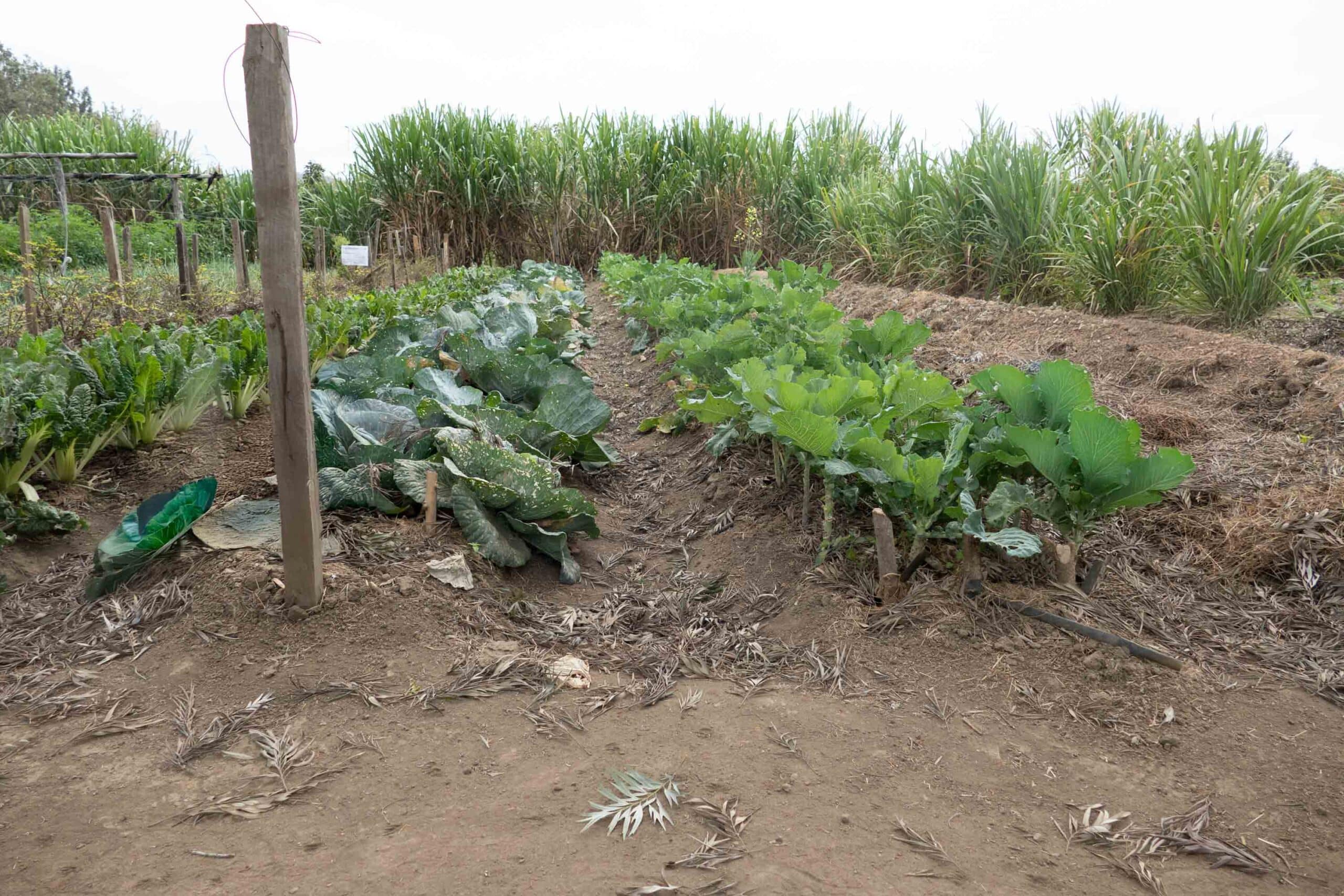
In this study, Denis Chomboko (IDOS), Theobald Theodory (Project C03 “Green Futures”), Michael Brüntrup (IDOS & Project B05 “Science Futures”), Venance Shilingi (Project B03 “Violent Futures”), Saymore Ngonidzashe Kativu (IDOS & Project B05 “Science Futures”) and Anna-Katharina Hornidge examine the use of indigenous agricultural technologies among smallholder farmers in Turiani, Tanzania, revealing that while most farmers are aware of and use these practices to varying degrees, their assessments differ by type. The findings suggest a blending of indigenous and modern knowledge—termed “local” knowledge—and highlight the potential value in validating and promoting selected indigenous methods.
Indigenous knowledge for sustainable food security in Turiani division, Tanzania
By Denis Chomboko (German Institute of Development and Sustainability, IDOS), Theobald Theodory (Project C03 “Green Futures”), Michael Brüntrup (IDOS & Project B05 “Science Futures”), Venance Shilingi (Project B03 “Violent Futures”), Saymore Ngonidzashe Kativu (IDOS & Project B05 “Science Futures”) and Anna-Katharina Hornidge (IDOS & Project B05 “Science Futures”)
Abstract
Smallholder agriculture in sub-Saharan Africa faces many problems. The adoption of modern innovations has been low. Indigenous alternatives may constitute alternatives; however, they have received less attention. This study contributes to filling this gap in the case study of Turiani, Tanzania. A mixed-method research design was used to understand farmers’ use and assessment of indigenous technologies. The quantitative survey covered 280 households, with 16 qualitative in-depth expert interviews. Almost all farmers were aware of indigenous technologies. Well over one-third applied indigenous practices to a high degree, just over a third to a moderate degree. The assessments varied substantially by technology; most methods of harvesting, crop storage, and indigenous water management were very positively assessed, while indigenous seed practices, irrigation, and granaries received less but still positive appreciation. Farmers were divided with regard to indigenous land management and crop rotation. A few indigenous technologies have been widely considered with skepticism, particularly pest control. Overall, the results indicate that farmers merged indigenous and modern knowledge. This is highly specific, we call this ‘local’ knowledge, in explicit difference to purely ‘indigenous and traditional’ knowledge. We conclude that it would seem worthwhile to maintain, scientifically validate, possibly further refine, and disseminate selected indigenous technologies.
Reference
Chomboko, D., Theodory, T., Brüntrup, M., Shillingi, V., Kativu, S. N., & Hornidge, A. K. 2025. Indigenous knowledge for sustainable food security in Turiani division, Tanzania. Cogent Social Sciences, 11(1). DOI