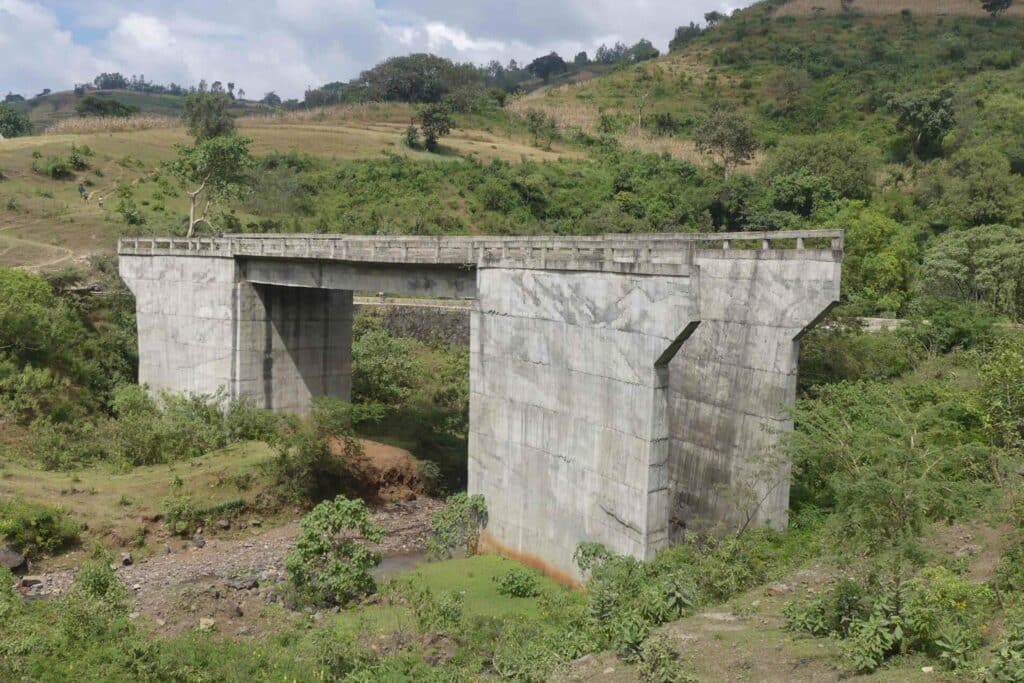
This special issue of Third World Quarterly, guest-edited by Detlef Müller-Mahn, Eric Kioko and Theo Aalders from our sub-project C03 “Green Futures” explores “ghost projects,” or unfinished infrastructure developments whose lingering, half-present state continues to shape future development visions and practices. It defines the concept, distinguishes it from related ideas, and proposes a typology based on visibility, outcomes, and temporality.
Ghost Projects and the Ambiguity of Infrastructure Development
Guest Editors: Detlef Müller-Mahn, Eric Kioko and Theo Aalders
Abstract
This editorial introduces the special issue on ‘Ghost Projects – Ruined Futures and the Promises of Infrastructure Development’. It defines ghost projects as a way of encountering unfinished infrastructure whose ambiguous present-absence continues to influence development imaginations and practices. Drawing on the empirical material provided by the 12 contributions to this special issue, the editorial distinguishes ghost projects from related concepts and proposes a typology based on the dimensions of visibility, outcome and temporality.
Articles
The issue features a total of 12 research articles. Articles with contributions from Future Rural Africa researchers can be found below:
A time for monsters: ghost projects, Gothic Marxism, and the transgressive horror of infrastructure futures
Theo Aalders (Project C03 “Green Futures”) & Wangui Kimari (American University Nairobi and African Centre for Cities (ACC))
Reviving a ghost project: the long history of the Nyerere Dam in Tanzania
Emma Athanasio Minja (Project C05 “Framing Futures”) & Detlef Müller-Mahn (Project C03 “Green Futures”)
‘Performing a paper park – visions, controversies and side-effects of a transboundary conservation megaproject
Johannes Dittmann (Associated researcher, Project C03 “Green Futures”)
Resurrecting a presumed ghost: the challenges and revival of the Southern agricultural growth corridor of Tanzania in a changing political landscape
George T. Mudimu, Michael Brüntrup & Khamaldin Daud Mutabazi (Project B05 “Science Futures”)
Ghost airports: the boom and bust of large infrastructure projects
Detlef Müller-Mahn (Project C03 “Green Futures”), Evelyne Atieno Owino (Project B03 “Violent Futures”) & Theobald Frank Theodory (Project C03 “Green Futures”)
Reference
Müller-Mahn, D., Kioko, E., Aalders, T. (eds.) 2026. Ghost projects – ruined futures and the unfulfilled promises of infrastructure development. Third World Quarterly, Volume 47, 2026. DOI