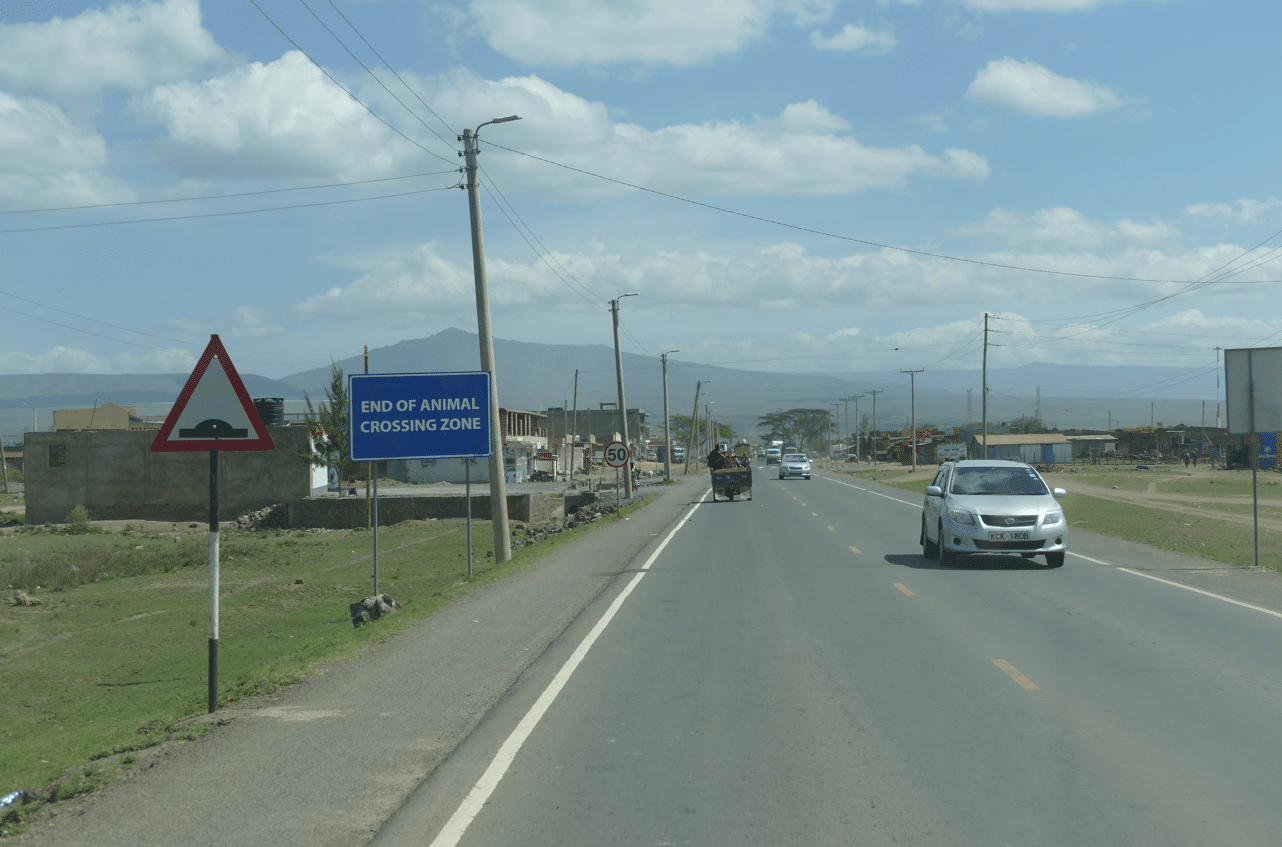
In this study, Vincent Moseti, Jan Börner and Lisa Biber-Freudenberger from our sub-project A05 “Future Roads” take a look at road accessibility and market access in Kenya. Their findings suggest that improved road access in Kenya (2002–2022) increased market connectivity but is causally linked to higher land degradation, especially in forests and croplands, with population concentration and livestock density as key drivers. While most land remained stable, the results show that infrastructure-led market integration can intensify environmental pressures, highlighting the need to coordinate road development with sustainable land-use planning.
Road accessibility and land degradation: Evidence from Kenya’s road development between 2002–2022
By Vincent Moseti, Jan Boerner, Lisa Biber-Freudenberger
Abstract
Road accessibility improves market access but may intensify pressure on land or enable economic diversification that reduces degradation. We assess the causal relationship between road-driven market accessibility and land degradation in Kenya from 2002 to 2022 using high-resolution panel data. Market accessibility is measured as travel time to the nearest towns based on detailed time-series road network maps, while land degradation is captured using multiple remote-sensing indicators. We find that 81% of Kenya’s land remained stable over the period, while 10% degraded and 9% improved, with forests and croplands degrading the most. Improved accessibility is consistently associated with greater land degradation, primarily mediated by population concentration and, to a lesser extent, livestock density. These findings highlight how infrastructure-driven market integration can intensify land pressures in land-dependent economies, underscoring the need to align road investments with land-use planning to balance development and environmental sustainability.
Reference
Moseti, V., Boerner, J., Biber-Freudenberger, L. 2026. Road accessibility and land degradation: Evidence from Kenya’s road development between 2002–2022,
Transportation Research Part D: Transport and Environment, Volume 156, 2026. DOI