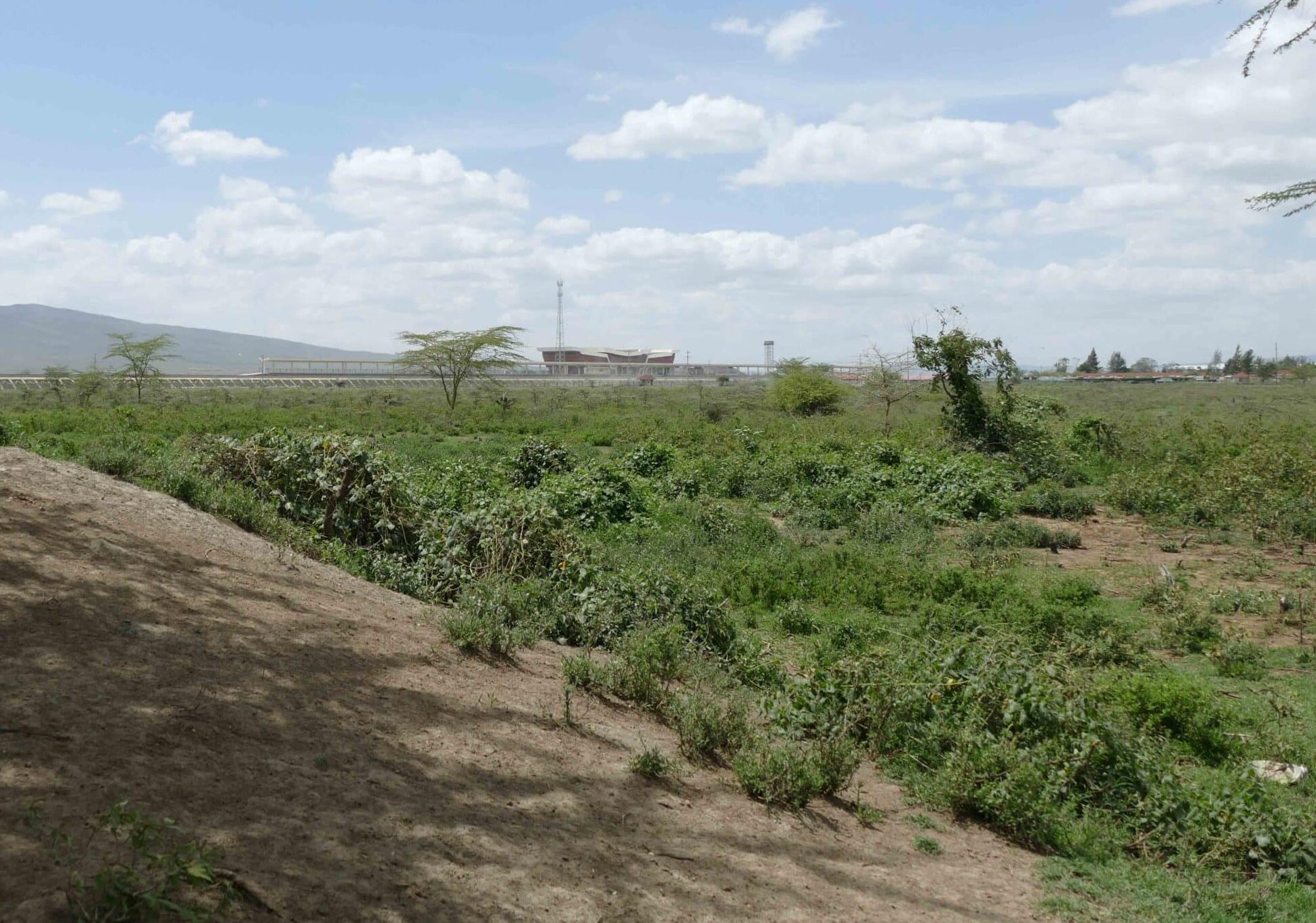
In this article, Makulangwa Jeremiah Chambo (Mzumbe University) and Lucy Willy Massoi (Project B03 “Violent Futures”) examine how the Standard Gauge Railway (SGR) in Tanzania has reshaped livelihoods and governance among the Ilparakuyo Maasai in Kilosa District. They find that rather than displacing pastoralists, the railway has prompted adaptive changes—such as new trading opportunities and diversified incomes—while largely reinforcing pastoral livelihoods and producing hybrid socio-spatial arrangements.
Pastoralism Reorganised: Maasai Resilience and Governance in the Shadow of Mega-Infrastructure in Tanzania
By Makulangwa Jeremiah Chambo and Lucy Willy Massoi
Abstract
Mega-infrastructure projects are widely promoted as engines of modernisation in Africa, yet their implications for pastoralist societies remain contested. This article examines how Tanzania’s Standard Gauge Railway (SGR) has reshaped livelihoods, governance, and spatial practices among the Ilparakuyo Maasai in Kilosa District. Using interviews, focus group discussions, and field observations, the study draws on Lefebvre’s notion of the production of space and resilience theory to analyze community responses. The findings show that the SGR has not displaced pastoralists but reorganised their practices through adaptation rather than transformation. Stations and adjacent settlements became economic hubs appropriated by women traders and youth entrepreneurs, with profits often reinvested in livestock, reinforcing pastoral continuity. Resilience emerged through livelihood diversification, though unevenly distributed across households. Governance appeared as a contested arena, where elders mediated disputes, women pressed for inclusion, and state regulations reshaped authority. The study argues that the SGR generates hybrid socio-spatial realities in which pastoralists assert agency, reorganise livelihoods, and renegotiate authority. By moving beyond binary narratives of disruption versus modernisation, it extends debates on infrastructure, resilience, and governance in African rangelands.
Reference
Chambo, M. J., Massoi, L. W. 2026. Pastoralism reorganised: Maasai resilience and governance in the shadow of mega-infrastructure in Tanzania. Cogent Social Sciences, 12(1). DOI