The recently published article “Impacts of road development in sub-Saharan Africa: A call for holistic perspectives in research and policy” is based on research conducted in several sub-projects of the Collaborative Research Centre Future Rural Africa. It is co-authored by Lisa Biber-Freudenberger, Christina Bogner, Georg Bareth, Nicodemus Nyamari, Vincent Moseti and Dennis Otieno Ochuodho from Project A05 Future Roads, Jan Börner and Elias Kuntashula from Project A01 Future Carbon Storage, Michael Bollig from Project A04 Future Conservation, Peter Dannenberg and Javier Revilla Diez from Project C01 Future in Chains, Clemens Greiner and Britta Klagge from Project C02 Energy Futures, Detlef Müller-Mahn and Theobald Theodory from Project C03 Green Futures, Tanja Kramm from Project Z02 Data Management and Services (INF), Philipo Jacob Mtweve from the University of Bonn’s Center for Development Research and Jessica Paula Rose Thorn from the University of Namibia. This interdisciplinary approach is the very core of the Future Rural Africa Project’s outlook, which strives to combine excellent, complementary expertise from a wide range of disciplines in the natural and social sciences.
Summary
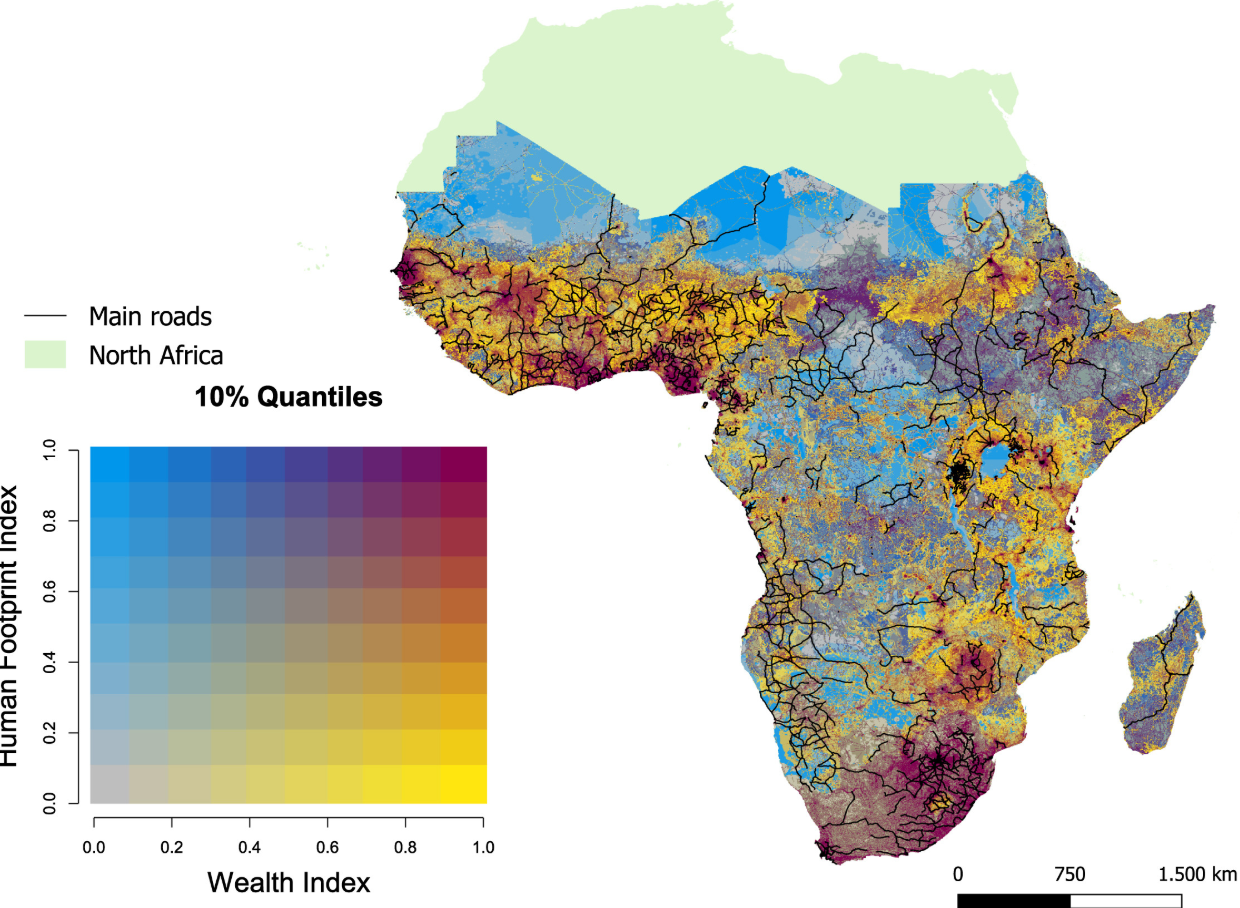
This perspective explores the multifaceted development challenges related to road network expansion in sub-Saharan Africa, where recent infrastructure investments reflect transformative ambitions but also imply socio-ecological tradeoffs. Roads can boost economic growth by facilitating trade, tourism, and access to essential services, yet they simultaneously contribute to ecosystem fragmentation, biodiversity loss, and human-wildlife conflicts. Looking at the history of Africa’s road development, we find that mega-projects—often funded by international donors—reshape political and economic landscapes while altering rural livelihoods and ecosystems. We synthesize literature and case studies to reveal critical trends and propose solutions, urging for a shift toward sustainable, evidence-based infrastructure strategies that balance development with environmental stewardship. We further advocate for transdisciplinary approaches and community engagement to align road expansion with long-term stakeholder needs so as to minimize adverse impacts on Africa’s socio-ecological systems.
Graphical Abstract

Reference
Biber-Freudenberger, L., Bogner, C., Bareth, G., Bollig, M., Dannenberg, P., Revilla Diez, J., Greiner, C., Mtweve, P. J., Klagge, B., Kramm, T., Müller-Mahn, D., Moseti, V., Nyamari, N., Ochuodho, D. O., Kuntashula, E., Theodory, T., Thorn, J., Börner, J. 2025. Impacts of road development in sub-Saharan Africa: A call for holistic perspectives in research and policy. iScience, Volume 28, Issue 2. DOI