Triggered by the worldwide protests against police violence and the related debates against structural forms of discrimination that unfolded after the violent killing of George Floyd in the Unites States of America, members of the CRC started a discussion on academic partnerships in the context of North-South research projects. Questions about how to establish horizontal collaborations in such international research projects are central to this debate.
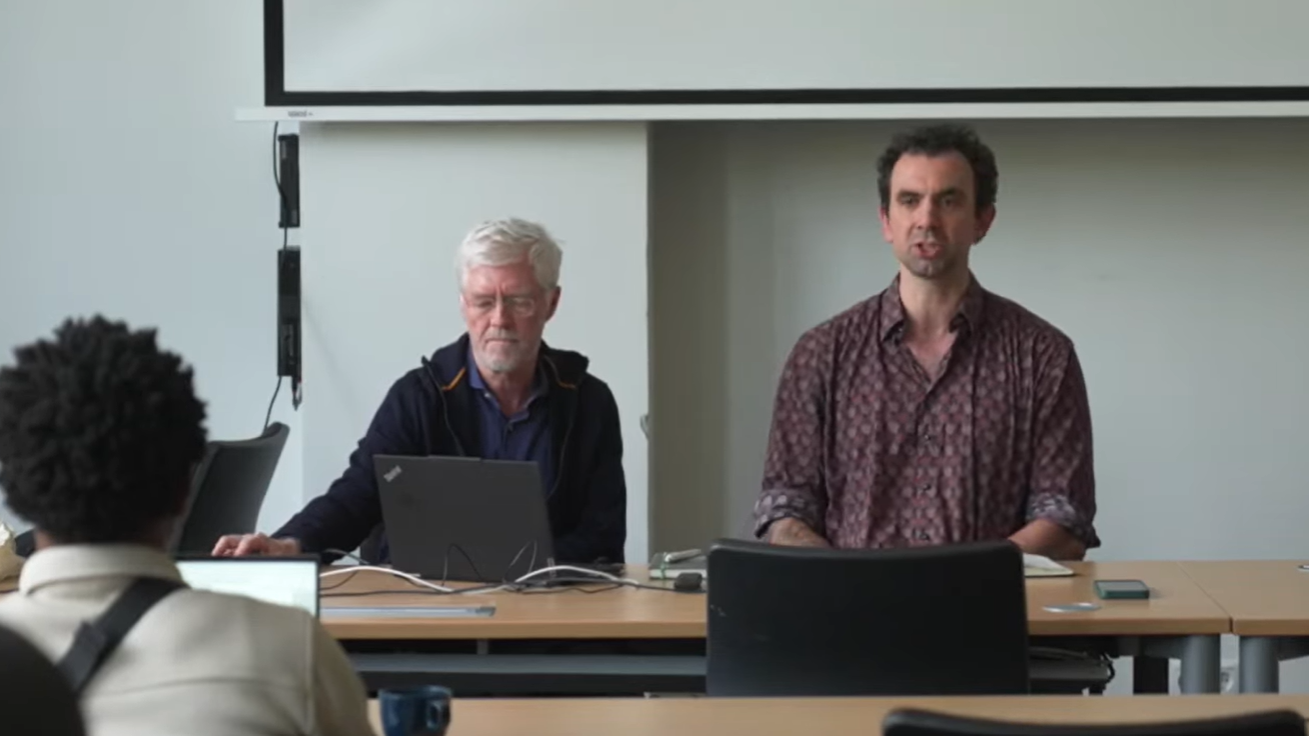
To further the discussion, the CRC invited Dr. Vanessa Thompson (European University Viadrina, Frankfurt, Oder) to moderate an online workshop on 12 October this year. Vanessa Thompson has a background in Philosphy and Sociology and a focus on critical studies, with special attention to racism and migration. She is an expert on post- and decolonial feministic theories.
The workshop started with a talk by Vanessa Thompson, titled “Exiting the comfort zone and entering the contact zone: postcolonial-feminist ethnographies between self-reflexivity and anthropology of postcolonial power relations.” In her presentation, she provided a number of concepts from the field of postcolonial studies, that may be applied to examine research collaborations. Most notably, Vanessa Thompson suggested to understand academia and the research realm, especially within the context of research projects in which researchers of the Global North engage with their colleagues in the Global South, as a postcolonial ‘contact zone’: A social space, “[…] where cultures meet, clash and grapple with each other, often in contexts of highly asymmetrical relations of power, such as colonialism, slavery, or their aftermaths as they are lived out in many parts of the world today.” (Pratt 1991: 34)
Departing from this conceptualization a couple of points derive, along which such North-South research collaborations can be evaluated: (1) Has horizontal research collaboration between scholars from the North and their colleagues from the Global South been established? (2) Has it been considered what matters to the people one works with? (3) Are research findings being disseminated among the partners, stakeholders and the studied communities? (4) Has research been carried out in a self-reflexive manner? (5) Are the research results accessible to the scientific and local communities in the research countries?
The subsequent discussion, that unfolded at the workshop, was structured along two lines. On the one-hand, the CRC and its research partnerships were examined and points for improvement of the collaborations were identified. On the other hand, general, structural hindrances to the establishment of horizontal research collaborations were recognized.
Especially with regard to the formulation of a proposal for the continuation of the CRC, the workshop participants found it useful and important to evaluate the first funding phase along the above-mentioned points: where did the CRC succeed to establish horizontal research partnerships and where did it fail to do so, and why? When it comes to the design of the research questions, this could be done together with partners, already defining their role in the research plan. The CRC has already developed strategies in order to assure better integration of its partners, and is actively making its findings available to researchers worldwide. While these efforts should be stressed, there is also room to further develop equal research partnership in the context of the collaborative research centre.
Structurally, the CRC – much as other third-party funded research projects in the Global North – grapples with hurdles that impede horizontal collaboration. In countries of the Global North, funding for projects that work in the Global North is often part of a larger development agenda, that might be at odds with the independent development of scientifically relevant research topics. Moreover, the bureaucratic processes that research collaborations are involved in at universities in the Global North as much as at partner institutions in the South, make the establishment of partnerships at times cumbersome. Research collaborators often find themselves rendered as service providers, rather than equal academic partner. Lastly, at least in Germany, there are currently no ethical standards against which research in and with the Global South is measured against. While approval of the research proposal by ethical review committees is in fact mandatory, a specific evaluation of the establishment of North-South research partnerships is still lacking.
Especially with the current travel restrictions in times of the global COVID-19 outbreak, research partnerships are crucial to any project that works across the North-South divide. In this context, the workshop with Vanessa Thompson offered a valuable perspective on scientific research collaborations, not only for the CRC. Preparing the proposal for the second funding phase, we are already incorporating some of the ideas that developed out of the workshop.
Reference:
Pratt, ML 1991, Arts of the Contact Zone. Profession 1991: 33-40.