Reconciling East-African wetland conservation with human needs – Managing uncertainties in environmental policy design

By Matthias Langensiepen, CRC Project A03 Agro Futures

East-African and German wetland scientists and policy-makers established a new environmental policy-framework for reconciling East-African wetland conservation with human needs. Fundamental questions were discussed: What is the relation between environmental science and policy? Does it make sense to protect nature when people are hungry ? On what basis can environmental conflicts be solved? Which policy process theories could be applied? How can prescriptive modelling be overcome? The solution was motivated by a recent report on Diverse Values and Valuation of Nature published by the Intergovernmental Science-Policy Platform on Biodiversity and Ecosystem Services (IPBES 2022). A new Cognitive Driven Information Design (CDID) method was developed to support policy analysts in preparing environmental decision scenarios for socio-political deliberation.

It is rare that scientists and policy-makers write an article together. It has been a mutually enriching experience. We hope you will enjoy reading it.

Click here for full article.


Reference

Langensiepen M., Omwandho Opiyo E., Kaudia A.K., Rugege D., Richard K., Akotsi E., Ashitiva D., Ningu J.K., Munyazikwiye F., Ngaboyamahina T., Urassa J.K., Ugen M., Sebashongore D., Oyieke H., Misana S., Kammesheidt L., Becker M. 2023. Reconciling East-African wetland conservation with human needs: Managing uncertainties in environmental policy design. Wetlands 43, 36. DOI
More CRC News

construction workers in sub saharan africa

New Publication: Off-Farm Work Helps Reduce Seasonal Food Insecurity in Rural Sub-Saharan Africa

In this study, Jonas Guthoff, Martin Parlasca and Matin Qaim (Project C08 “Job Futures”) examine whether taking on off-farm work helps rural households in sub-Saharan ...
Read More »
image shows a net contraption to catch tse tse flies

Tsetse Flies Between Threat and Coexistence: Narratives and Disease Landscapes in Zambia

Léa Lacan (Project A04 “Future Conservation”) examines how different narratives portray tsetse flies in Zambia—as dangerous disease vectors, protectors of wilderness, or co-inhabitants—and how these ...
Read More »
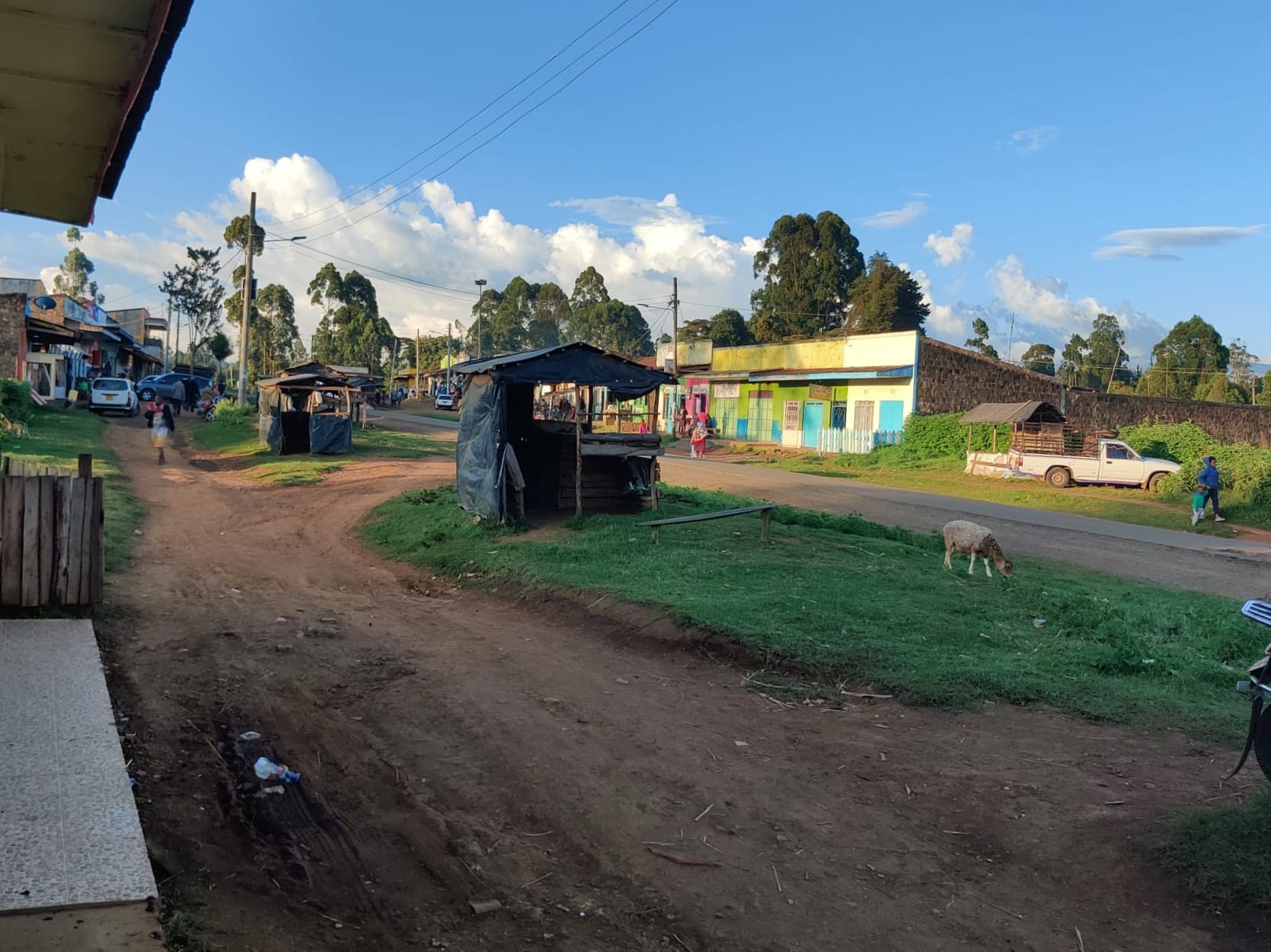
image shows a road in kenya

New Publication: Road Access Improves Market Integration—but Accelerates Land Degradation in Kenya

In this study, Vincent Moseti, Jan Börner and Lisa Biber-Freudenberger from our sub-project A05 “Future Roads” take a look at road accessibility and market access ...
Read More »

Call for Applications: Postdoctoral Researcher / Curator

The Department of Geography at the University of Bonn and Futurium are partnering on the Z05 project “Negotiating African Futures: an exhibition project” of the ...
Read More »
landscape in northern Kenya

How Violence has Evolved into a Political Technique of Territorial Control in Northern Kenya

In this study, Evelyne Atieno Owino uses assemblage theory to examine how devolution has transformed the logic of pastoral conflict from reciprocal raiding into a ...
Read More »
Scroll to Top