New Publication: The Temporalities and Externalities of Ancillary Infrastructure in Large-Scale Renewable Energy Projects: Insights from the Rural Periphery

By Clemens Greiner and Britta Klagge (Project C02 Energy Futures).

Abstract

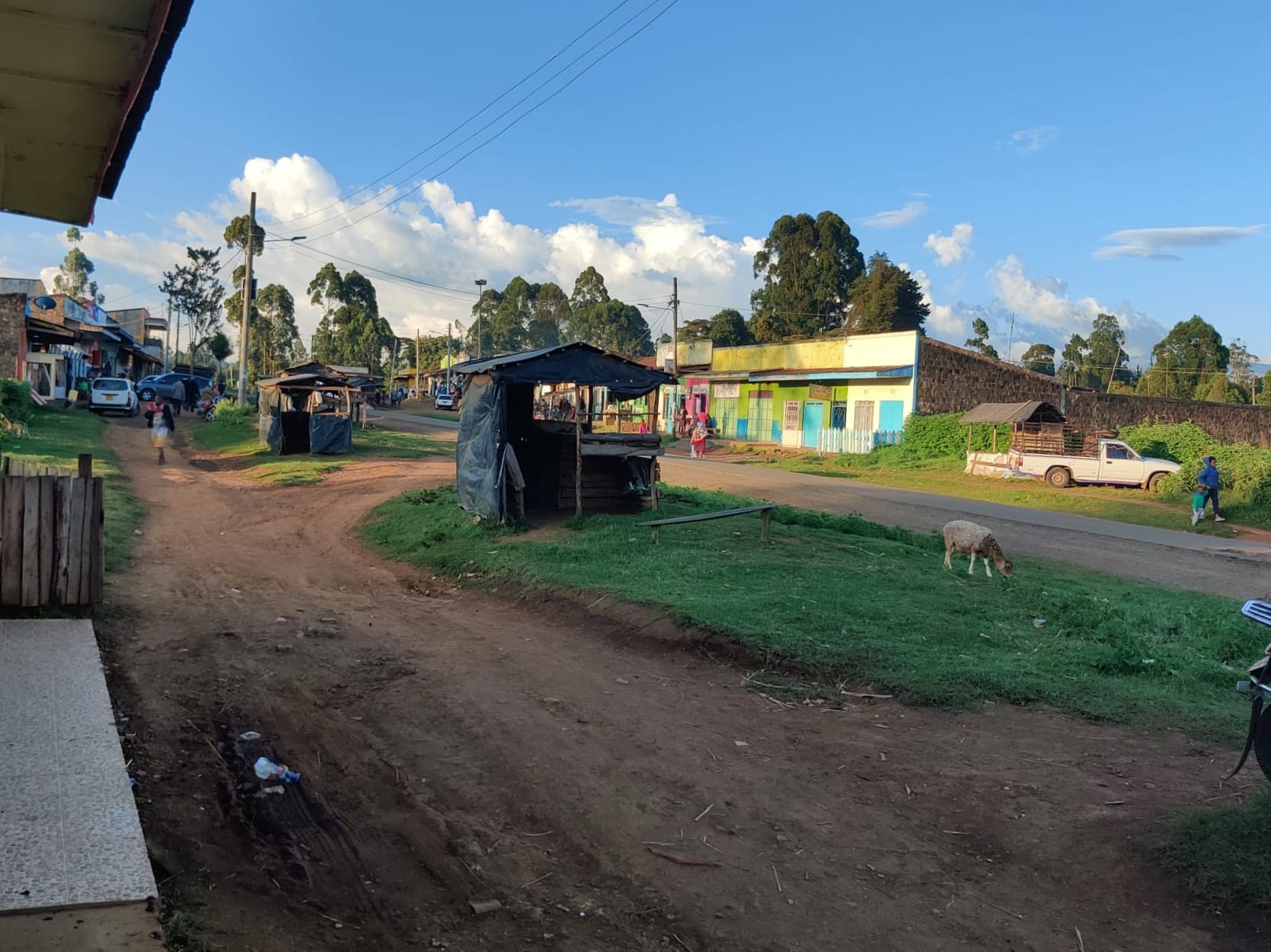
Ancillary infrastructures such as roads, workers camps, or water management systems are an essential prerequisite for realizing large-scale renewable energy projects. They usually are established before the power plant is constructed and differ from it in their temporalities and externalities. Especially in peripheral regions in the Global South, ancillary infrastructure can have negative impacts on the affected communities as well as bring them significant co-benefits. Despite its extensive and often far-reaching nature, as well as social and ecological consequences, ancillary infrastructure has received little scholarly attention, and is often not given sufficient consideration by planners and investors. This article foregrounds ancillary infrastructure in peripheral rural areas with little pre-existing infrastructure. It provides a typology of ancillary and other infrastructures as well as a systematic discussion of its temporalities and externalities, and argues that local acceptance can increase significantly owed to positive externalities deriving from ancillary infrastructure. We illustrate our conceptual framework with the example of a large geothermal project in Kenya. Based on these conceptual and empirical findings, we conclude with detailed policy recommendations.

Reference

Greiner, C., Klagge, B. 2024. The temporalities and externalities of ancillary infrastructure in large-scale renewable energy projects: Insights from the rural periphery, Energy Policy, Volume 193, 2024, DOI

More CRC News

construction workers in sub saharan africa

New Publication: Off-Farm Work Helps Reduce Seasonal Food Insecurity in Rural Sub-Saharan Africa

In this study, Jonas Guthoff, Martin Parlasca and Matin Qaim (Project C08 “Job Futures”) examine whether taking on off-farm work helps rural households in sub-Saharan ...
Read More »
image shows a net contraption to catch tse tse flies

Tsetse Flies Between Threat and Coexistence: Narratives and Disease Landscapes in Zambia

Léa Lacan (Project A04 “Future Conservation”) examines how different narratives portray tsetse flies in Zambia—as dangerous disease vectors, protectors of wilderness, or co-inhabitants—and how these ...
Read More »
image shows a road in kenya

New Publication: Road Access Improves Market Integration—but Accelerates Land Degradation in Kenya

In this study, Vincent Moseti, Jan Börner and Lisa Biber-Freudenberger from our sub-project A05 “Future Roads” take a look at road accessibility and market access ...
Read More »

Call for Applications: Postdoctoral Researcher / Curator

The Department of Geography at the University of Bonn and Futurium are partnering on the Z05 project “Negotiating African Futures: an exhibition project” of the ...
Read More »
landscape in northern Kenya

How Violence has Evolved into a Political Technique of Territorial Control in Northern Kenya

In this study, Evelyne Atieno Owino uses assemblage theory to examine how devolution has transformed the logic of pastoral conflict from reciprocal raiding into a ...
Read More »
Scroll to Top