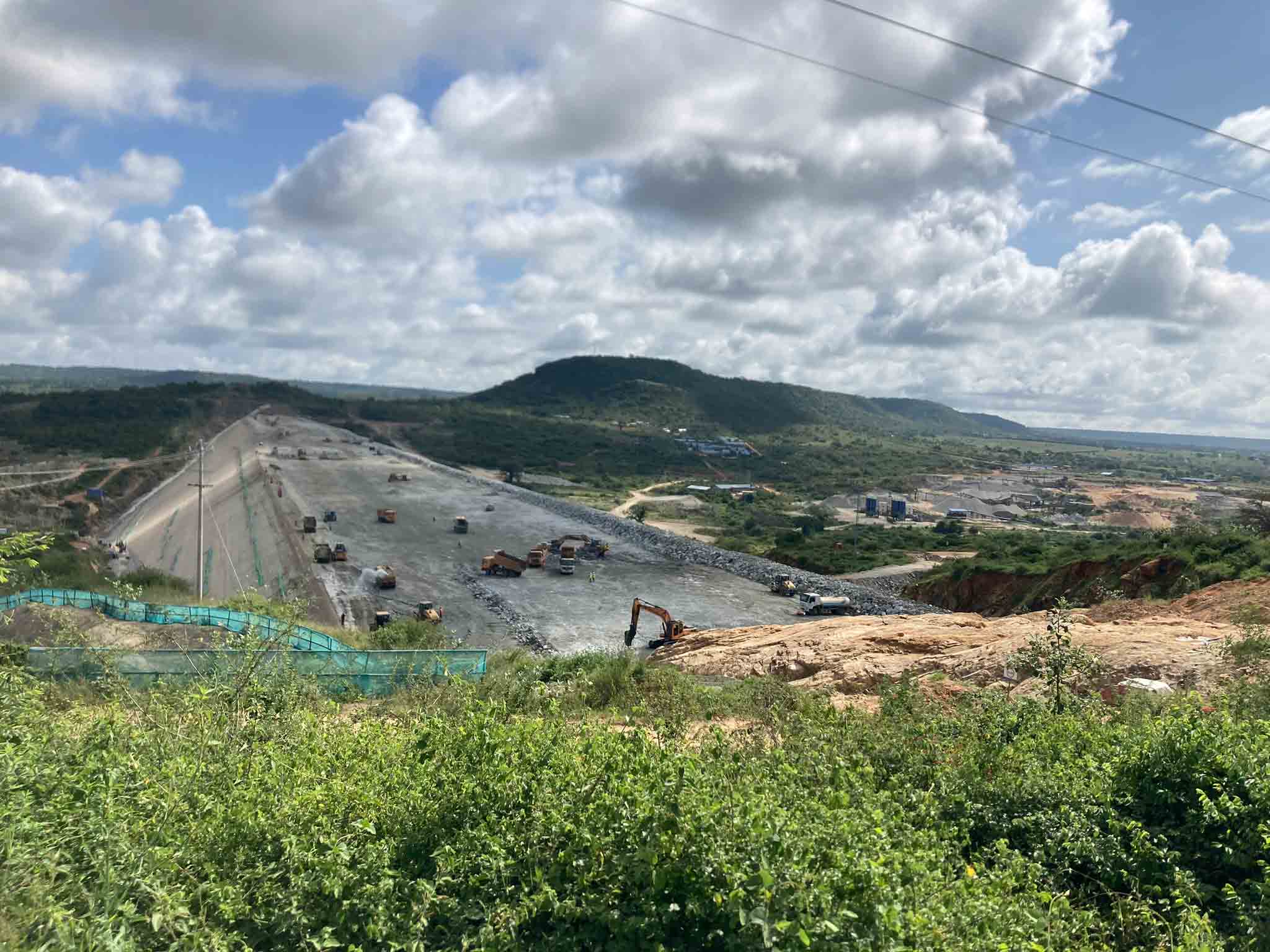
In this article, Arne Rieber, Eric Kioko and Theo Aalders (Project C03 Green Futures) examine how the promises of large-scale infrastructure projects shape community aspirations and speculative investments, using the Thwake Dam in Kenya as a case study. Their article highlights how stagnation, uncertainty, and irregularities during construction lead to a “non-economy of anticipation” and it is argued that the misuse of promises and project opacity create infrastructural violence even before the project’s completion.
The Non-Economy of Anticipation in the Construction Phase of Large Dams
By Arne Rieber, Eric Kioko and Theo Aalders
Abstract
Large-scale infrastructure projects often include government promises and visions designed to win the approval and support of affected populations and to attract much-needed funding for implementation. The promise of infrastructure leads to changes in the visions and aspirations of affected communities, and fuels anticipatory and speculative investment to tie one’s future to the perceived benefits of the project. In this article, we explore the process of translating promises into materiality. The construction phase of megaprojects has received comparatively limited scholarly attention, yet it is critical for understanding the socio-technical and socio-political relations of infrastructure. Using the construction phase of the Thwake Dam in Kenya as a case study, we show how the stagnation, uncertainty, and irregularities that characterize the implementation of large dams lead to a decline in initially dynamic anticipatory investment, resulting in what we call the “non-economy of anticipation.” We argue that the misuse of infrastructural promises and the opacity of project implementation lead to infrastructural violence long before the actual realization and apart from the materiality of the dam.
Reference
Rieber, A., Kioko, E. M., Aalders, T. 2025. The non-economy of anticipation in the construction phase of large dams”, Journal of Political Ecology 32(1): 6117. DOI