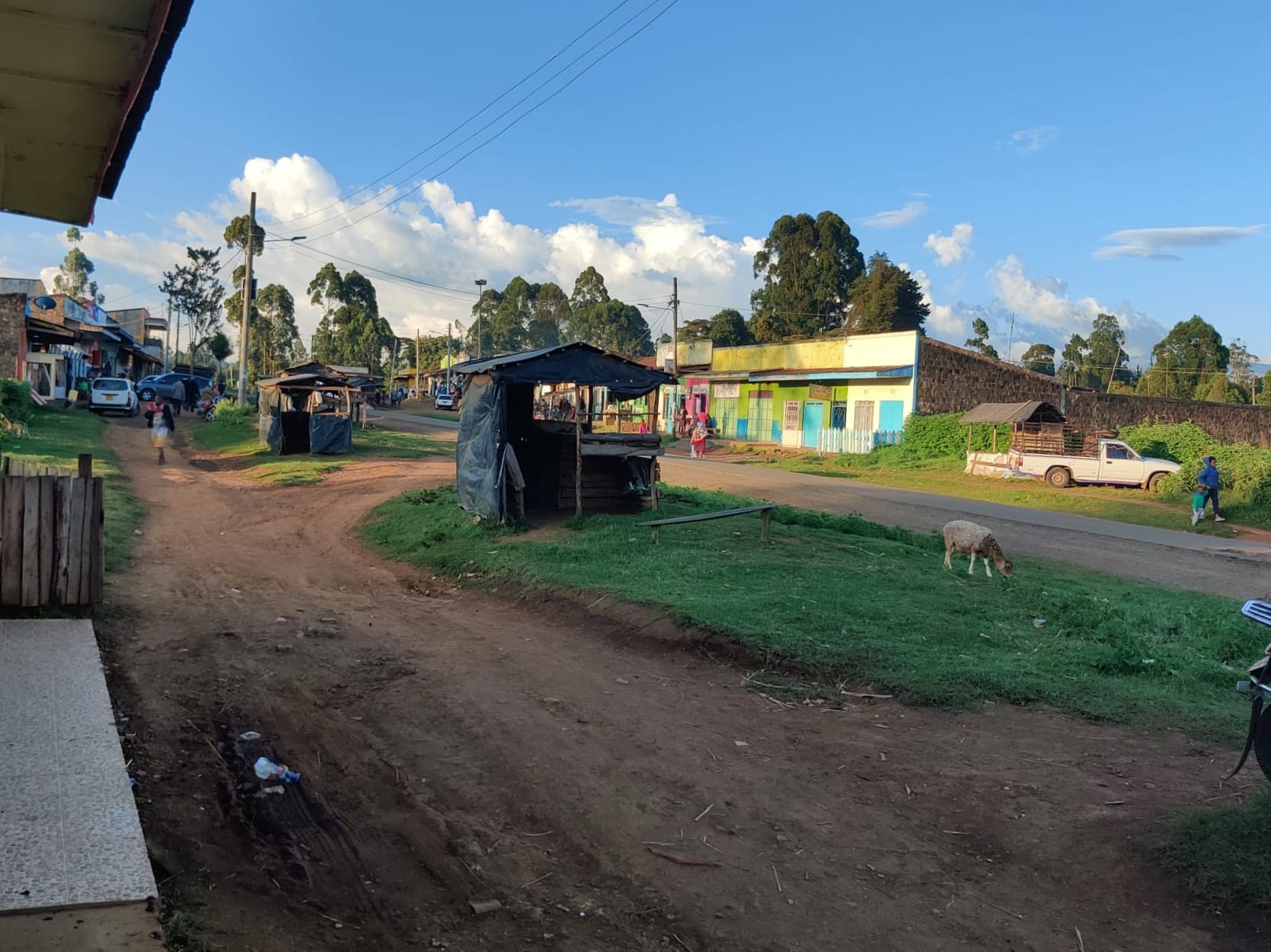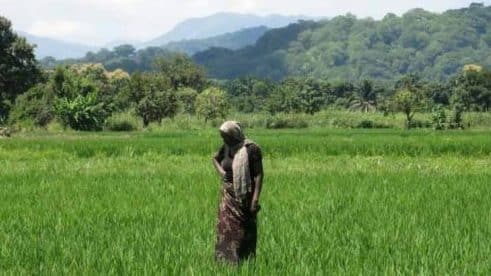
Publication: COVID-19: Food insecurity and coping strategies in Kenya, Namibia, and Tanzania

Abstract

This study assesses the extent of COVID-19-related food insecurity in Kenya, Tanzania, and Namibia. Using the Household Food Insecurity Access Scale, we measure food insecurity in various dimensions and document several food access disruptions associated with the COVID-19 pandemic between April and July 2020. Furthermore, we assess the association of COVID-19 countermeasures with the adoption of various strategies in line with the coping strategies index. We rely on a unique phone survey that followed households who participated in an earlier field-based survey. First, through Ordinary Least-Squares and Probit regressions, we show a strong and statistically significant association between COVID-19 countermeasures and food access disruptions and food insecurity in each of the three countries. We then use a multivariate probit regression model to understand the use of the various coping strategies, including reducing food intake, increasing food search, and relying more on less nutritious foods. We provide evidence on the complementarities and trade-offs in using these coping strategies. COVID-19 and related lockdown measures coincided with a deleterious increase in food insecurity in rural Africa.

Tabe-Ojong, MP, Gebrekidan, BH, Nshakira-Rukundo, E, Börner, J, & Heckelei, T 2022, ‘COVID-19 in rural Africa: Food access disruptions, food insecurity and coping strategies in Kenya, Namibia, and Tanzania‘, Agricultural Economics, pp. 1– 20. DOI, Full Text.

More CRC News

background: landscape with zebras in front: title and authors of academic publication

Rewilding and Power: Conservation Politics in the Kavango-Zambezi Transfrontier Region

In this article, Léa Lacan and Johannes Dittman, associated reseachers from our sub-projects A04 “Future Conservation” and C03 “Green Futures”, examine rewilding in the Kavango-Zambezi ...
Read More »
cover for a web post

Epistemic Voids: A New Lens on Knowledge and Future-Making

Saymore Ngonidzashe Kativu and Anna-Katharina Hornidge (Project B05 “Science Futures”) introduce the concept of epistemic voids to explain how structural absences in knowledge systems shape ...
Read More »

Call for Panels: European Conference of African Studies (ECAS) 2027 in Lisbon

As Europe’s largest and most international conference with an African focus, ECAS2027 – the 11th European Conference of African Studies – will be held as a face-to-face ...
Read More »

New Publication: How Demonstration Plots Shape Agricultural Futures

In this study, Saymore Ngonidzashe Kativu, Javier Revilla-Diez and Anna-Katharina Hornidge, researchers from our sub-projects B05 “Science Futures” and C01 “Future in Chains”, argue that demonstration ...
Read More »
RESEARCHER DRAWING ON AN IPAD WHILE SITTING ON A BUS

Navigating Belonging in Global Science: New Publication Highlights Early Career Researchers’ Experiences

In this paper, Saymore Ngonidzashe Kativu (Project B05 “Science Futures”) offers a reflective, autoethnographic account of what it is like to be an Early Career Researcher ...
Read More »
Scroll to Top