New Publication: How Labour has the Potential to Make Marginalised Futures Visible and Real

In this recent publication, Theo Aalders and Detlef Müller-Mahn (Project C03 Green Futures) explore how labour shapes future-making in East African infrastructure projects, balancing between material realities and anticipatory imaginaries. Their research highlights three key tensions: the mediation between present materiality and future visions, the visibility and invisibility of labour, and the dual nature of labour as both exploitative and a potential site of resistance and liberation.


The Hard Work of Future-Making: Alienated Futures, Invisible Labour and Liberation

By Theo Aalders and Detlef Müller-Mahn

Abstract
This article proposes that future-making is hard work. Drawing on examples of work on and around infrastructure projects in East Africa, we show how people orient themselves towards the future through both imagination and material practices. We argue that work navigates between apparent opposites, and identify three antagonisms that are particularly relevant to our argument. First, we discuss how labour mediates between material reality and anticipatory imagination, extending this argument to include a mediation between material present and immaterial future imaginaries. Second, we show how labour can oscillate between visible, even spectacular, performance of labour and employment, and the invisible work of often marginalised people.

Finally, we argue that while labour is often characterised by exploitative dynamics, it also offers possibilities for resistance – as well as promises of liberation – through organised labour in various forms. We conclude that (organised) labour, particularly around infrastructure projects, has the potential to make marginalised futures visible and real, thus challenging dominant imaginaries and material realities of the future inscribed by infrastructure master plans. These arguments are illustrated by vignettes collected during fieldwork on the Nairobi Express, along the proposed Lamu Port-South Sudan-Ethiopia-Transport (LAPSSET) corridor in Kenya and around a dam construction site in Tanzania.
rtep a 2438844 f0001 oc
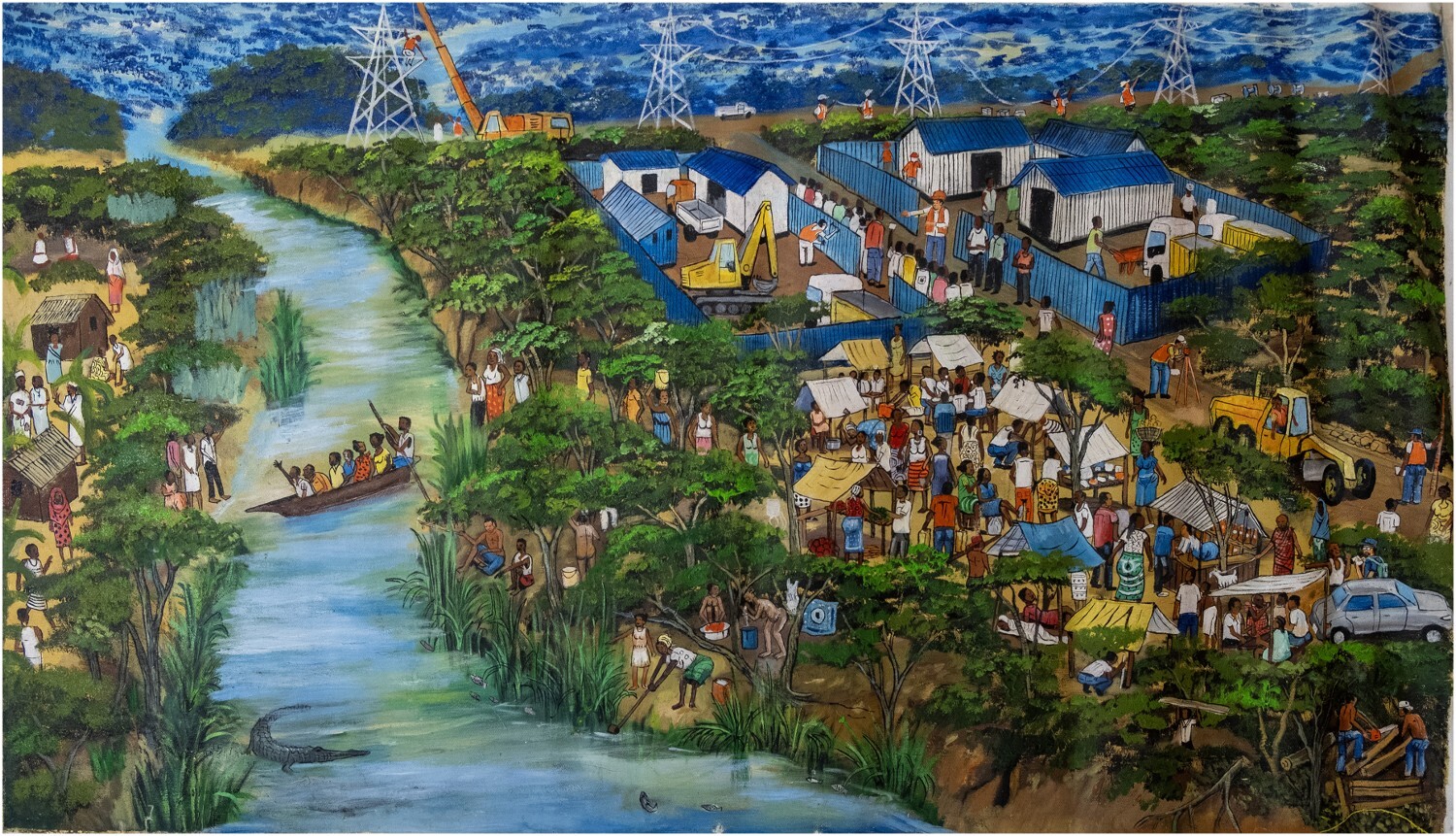
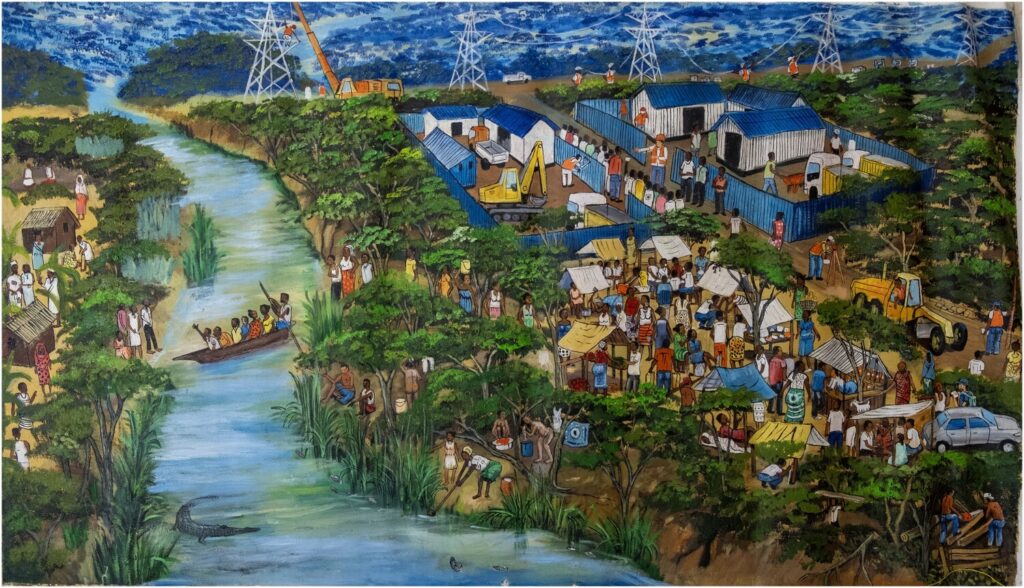
This illustration portrays the emerging labor camp near the future Kidunda Dam construction site, highlighting the intersection of infrastructure development, precarious labor, and the yet-to-materialize promises of the dam project. In July 2023, Future Rural Africa Project C03 Green Futures conducted a collaborative painting workshop with six of the camp’s inhabitants and a Tanzanian painter, which makes the invisible life of ‘forgotten’ workers visible. Artwork by: Lyombo; Photograph by: Theo Aalders. CC BY-NC 4.0.


Reference

Aalders, T., Müller-Mahn, D. 2025. The hard work of future-making: alienated futures, invisible labour and liberation. Territory, Politics, Governance, DOI
More CRC News

logo of jkuat

Call for Applications: JKUAT Summer School on Transdisciplinary Methods for Studying Social-Ecological Systems

With funding from the Volkswagen Foundation, the Jomo Kenyatta University of Agriculture and Technology (JKUAT) in Kenya in collaboration with the Research Unit on Agro-Pastoral, ...
Read More »
cover for a web post

Vereinbarkeitswoche 2026: „Zwischen Anspruch und Alltag – Wege zur Vereinbarkeit“ [DE]

Mit der gemeinsamen Vereinbarkeitswoche „Zwischen Anspruch und Alltag – Wege zur Vereinbarkeit“ realisiert das HochschulNetzwerk Familie (HNF) NRW erstmals ein institutionsübergreifendes Veranstaltungsformat für alle Studierenden ...
Read More »
cover for a web post

Diversity Day at the Universities of Bonn and Cologne

18-19 May 2026 To mark German Diversity Day, the Universities of Cologne and Bonn each offer extensive event programmes aimed at raising awareness on issues related ...
Read More »
construction workers in sub saharan africa

New Publication: Off-Farm Work Helps Reduce Seasonal Food Insecurity in Rural Sub-Saharan Africa

In this study, Jonas Guthoff, Martin Parlasca and Matin Qaim (Project C08 “Job Futures”) examine whether taking on off-farm work helps rural households in sub-Saharan ...
Read More »
image shows a net contraption to catch tse tse flies

Tsetse Flies Between Threat and Coexistence: Narratives and Disease Landscapes in Zambia

Léa Lacan (Project A04 “Future Conservation”) examines how different narratives portray tsetse flies in Zambia—as dangerous disease vectors, protectors of wilderness, or co-inhabitants—and how these ...
Read More »
Scroll to Top